Choosing where to get married in Spain is the first big decision of a Spanish destination wedding. The country offers wedding venues of every kind, from island fincas and clifftop hotels to Andalusian palaces, Catalan coves, Basque wineries and volcanic landscapes in the Canary Islands. Each region has a different climate, a different journey for your guests and a different feel on the day.
This guide compares nine parts of Spain on the things that matter most for a wedding: the weather in the wedding months, how easily guests can fly in, the style of venues, the logistics and the costs. We’ll be open about our bias: we’re The Vow Producers, a wedding planner in Mallorca, and we think it’s one of the best places in Spain to get married. But we’ll tell you honestly where another region might suit you better, and why.
The short answer
- Mallorca: the most complete option. Big international airport, reliably dry summers, mountains and sea, and a huge choice of fincas and hotels. Best for a wedding weekend with guests from abroad.
- Ibiza: sunsets, beach clubs and a party atmosphere, with a calmer, rural side inland. Best for couples who want the celebration to go on.
- Menorca: quieter, greener and more low-key. Best for small weddings and couples who want simplicity.
- Andalusia (Seville, Granada, Málaga and Marbella): palaces, white villages and the Costa del Sol. Best in spring and autumn, because inland summers are very hot.
- Barcelona and the Costa Brava: a big-city wedding or a cove on the coast, with masías (Catalan farmhouses) in between. Best for couples who want city and sea in one trip.
- Madrid, Toledo and Segovia: historic cities and grand venues. Best for city weddings in spring or autumn.
- The Basque Country and La Rioja: food, wine and green landscapes. Best for food lovers who don’t mind the chance of rain.
- The Canary Islands: warm all year. Best for winter weddings.
- Valencia: paella country, orange groves and beaches. Best for couples who want a Mediterranean city with a relaxed pace.
Can you legally get married in Spain?
Before choosing a region, check what kind of ceremony you can have. For most couples from abroad, a legal civil wedding in Spain isn’t possible: the UK government’s guidance says that “you or your partner must live in Spain or be a Spanish national to get married in Spain”, and the US Embassy explains that couples apply to the Civil Registry where at least one of them lives. A Catholic church wedding has civil effect in Spain once it is registered, but each parish and diocese sets its own requirements.
That’s why most international couples marry legally at home and hold a symbolic ceremony in Spain, which can take place anywhere their venue allows. Our guide to getting legally married in Mallorca explains the three routes in detail, and most of it applies to the rest of Spain too.
What to weigh up when choosing a region
Weather in your wedding month
Spain’s climate varies far more than many couples expect. In June, the average daily maximum at Seville airport is above 32 °C, while at Igeldo, above San Sebastián, it’s 20 °C. The Mediterranean coast and the Balearic Islands sit in between, with warm days, sea breezes and very little rain in early summer. The Canary Islands stay warm and dry even in winter.
How guests get there
For a destination wedding, the journey matters as much as the venue. A region served by a large airport with many direct flights makes life easier and cheaper for your guests. In 2025, according to Aena, Madrid-Barajas handled 68.2 million passengers, Barcelona-El Prat 57.5 million, Palma de Mallorca 33.8 million and Málaga-Costa del Sol 26.8 million. Smaller airports such as Granada or San Sebastián have far fewer connections, so guests may need to change planes or drive from a bigger hub.
Where everyone will stay
A wedding with 100 guests needs rooms close to the venue, in high season, at a range of prices. Regions with a large tourist industry, such as the Balearic Islands, the Costa del Sol and the Canary Islands, have plenty of hotels and holiday homes. In smaller inland areas, a large guest list may be spread across several villages.
The style of wedding you want
A wedding in a Seville palace feels completely different from a finca in the Mallorcan mountains, a beach club in Ibiza or a winery in La Rioja. Start with the picture in your head, then see which region can deliver it.
Distances on the day
Some regions make it easy to keep everything close: hotel, ceremony and party within half an hour. Others, especially the large mainland regions, can mean long coach transfers. On an island like Mallorca, most venues are within about an hour of the airport.
Spain’s wedding regions compared
| Region | Main airport (passengers in 2025) | Average max. June / Sept | Rain days June / Sept | Best wedding months |
|---|---|---|---|---|
| Mallorca | Palma (33.8 million) | 28.1 / 27.9 °C | 1.8 / 4.3 | May–June, September–early October |
| Ibiza | Ibiza (9.1 million) | 26.8 / 27.7 °C | 1.4 / 4.2 | May–June, September–October |
| Menorca | Menorca (4.2 million) | 25.8 / 26.2 °C | 2.0 / 5.4 | June, September |
| Seville | Seville (9.7 million) | 32.2 / 31.7 °C | 1.3 / 2.4 | April–May, October |
| Granada | Granada (1.2 million) | 31.0 / 29.4 °C | 1.7 / 2.8 | May, late September–October |
| Málaga and the Costa del Sol | Málaga (26.8 million) | 28.1 / 28.2 °C | 0.8 / 2.1 | May–June, September–October |
| Barcelona and the Costa Brava | Barcelona (57.5 million) | 24.9 / 26.0 °C | 3.6 / 5.2 | June, September |
| Madrid | Madrid (68.2 million) | 28.2 / 26.4 °C | 3.4 / 3.3 | May–June, September–October |
| San Sebastián and the Basque coast | San Sebastián (0.5 million), Bilbao (7.1 million) | 20.0 / 21.1 °C | 10.6 / 10.1 | June–September |
| Canary Islands (Tenerife South) | Tenerife South (14.0 million) | 25.4 / 27.9 °C | 0.0 / 0.6 | All year |
| Valencia | Valencia (11.8 million) | 27.1 / 27.9 °C | 2.6 / 5.0 | May–June, September–October |
Temperatures and rain days are AEMET normals for 1981–2010 at each station (mostly airports; Valencia’s is in the city and Madrid’s is in Retiro Park). A rain day is a day with at least 1 mm of rain. Passenger figures are Aena’s final data for 2025. The “best months” column is our own judgement, based on the heat, the rain and the length of the evenings.
Mallorca
Mallorca is the largest of the Balearic Islands and, for many couples, the natural first choice for a wedding in Spain. Palma’s airport handled 33.8 million passengers in 2025, more than any other airport in Spain outside Madrid and Barcelona, and in summer it has direct flights from across the UK, Ireland and much of Europe. Most of the island’s venues are within an hour of the airport.
Why couples choose Mallorca
The island packs a lot of variety into a small space. The Serra de Tramuntana, a mountain range along the north-west coast, was inscribed as a UNESCO World Heritage cultural landscape in 2011, with stone villages such as Deià and Valldemossa above the sea. The central plain is farming country, full of historic estates (possessions) with space for large weddings. Palma has a cathedral, an old town full of courtyards and plenty of hotels, and the coast offers coves, clifftop hotels and beach clubs.
The weather is the other reason. At Palma airport, June averages 28 °C and fewer than two rain days, and September is still warm, with the sea at its warmest. For the full month-by-month picture, read our guide to the best time to get married in Mallorca.
What to bear in mind
Mallorca’s popularity has a downside: the best Saturdays from May to October book up 12 to 18 months ahead, and July and August are hot and busy. The island also has rules worth knowing about music times, fire risk in summer and events in holiday rentals. Our guide to choosing a wedding venue in Mallorca explains them, and our list of the best wedding venues in Mallorca brings together 30 fincas, hotels and estates, area by area.
Best for: couples with guests flying in from several countries who want a full wedding weekend with variety, reliable weather and a wide choice of venues.
Ibiza and Formentera
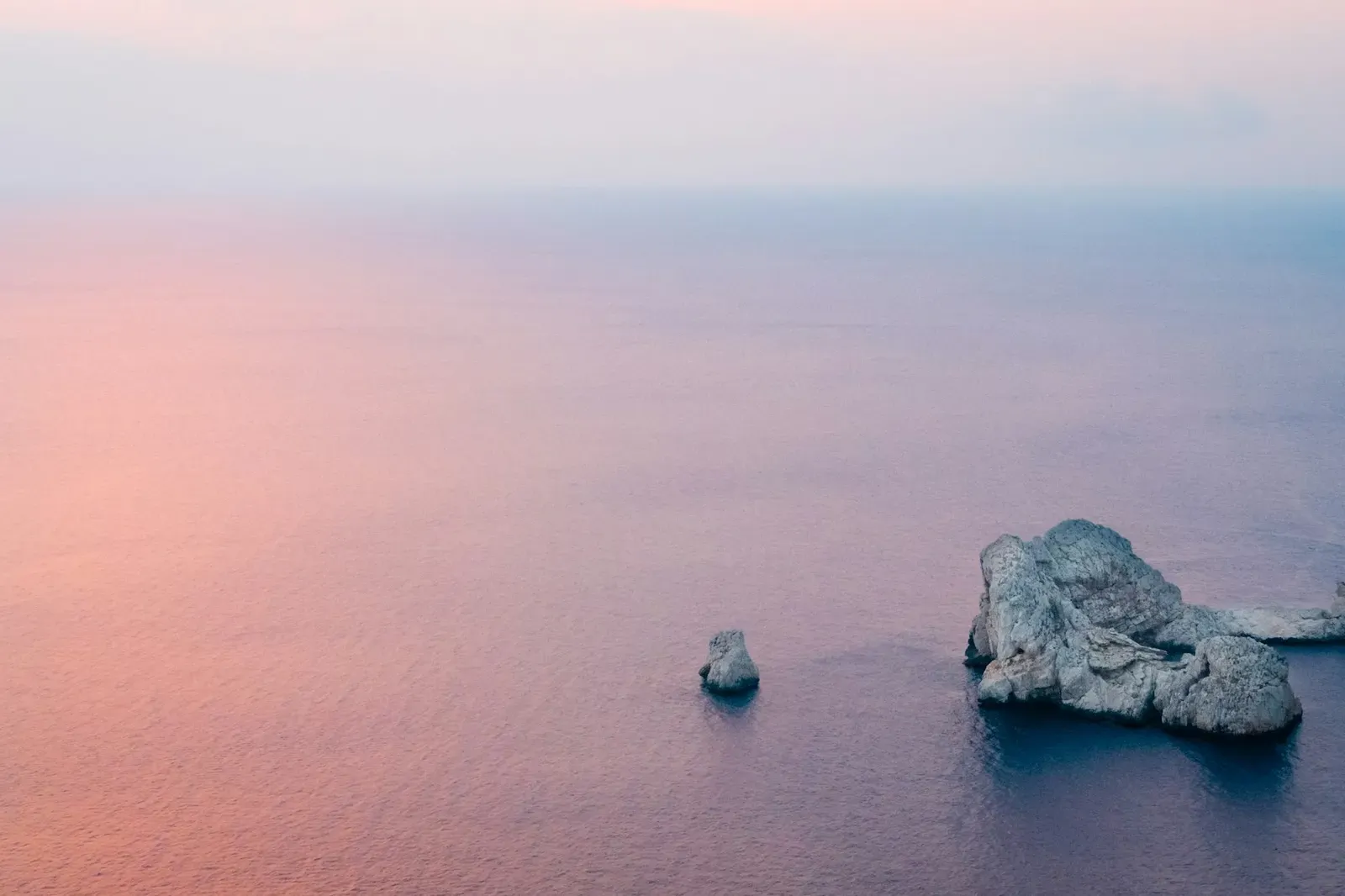
Ibiza is famous for its nightlife, but it has a quieter side too: whitewashed villages, pine forests and rural estates inland, and the old town of Ibiza, part of the UNESCO World Heritage site “Ibiza, Biodiversity and Culture”, inscribed in 1999. The island is smaller than Mallorca, so distances are short, and its sunsets on the west coast are part of the wedding-day ritual for many couples.
Ibiza airport handled 9.1 million passengers in 2025. Its climate is very similar to Mallorca’s, slightly milder in June, with very few rain days in early summer. Formentera, a short ferry ride away, has beaches of almost Caribbean colour but fewer venues and more complicated logistics.
Best for: couples who want a relaxed, bohemian feel, a sunset ceremony and a party that goes on late, in a venue that allows it.
Mallorca or Ibiza?
It’s one of the questions we hear most. Ibiza is smaller and more focused on beach clubs and parties; Mallorca is bigger and more varied, with mountains, historic estates, a real city in Palma and a much larger airport. If your heart is set on a party with a DJ until the early hours by the sea, Ibiza has a natural edge. If you want a choice between a mountain village, a country estate, a city palace and a sea view, with more flights for your guests, Mallorca offers more.
Menorca
The quietest of the three main Balearic Islands, Menorca was declared a UNESCO Biosphere Reserve in 1993, and its prehistoric Talayotic sites were added to the World Heritage list in 2023. It has unspoilt coves, two historic towns at either end of the island (Ciutadella and Mahón) and a slower pace of life. Menorca’s airport handled 4.2 million passengers in 2025, with fewer direct routes outside the summer season.
It’s slightly cooler than Mallorca, with an average June maximum of 25.8 °C at the airport, and a little more rain in September and October. The number of large venues is smaller, which suits intimate weddings well.
Best for: small weddings and couples who value nature and calm over choice and nightlife.
Andalusia: Seville, Granada, Málaga and Marbella
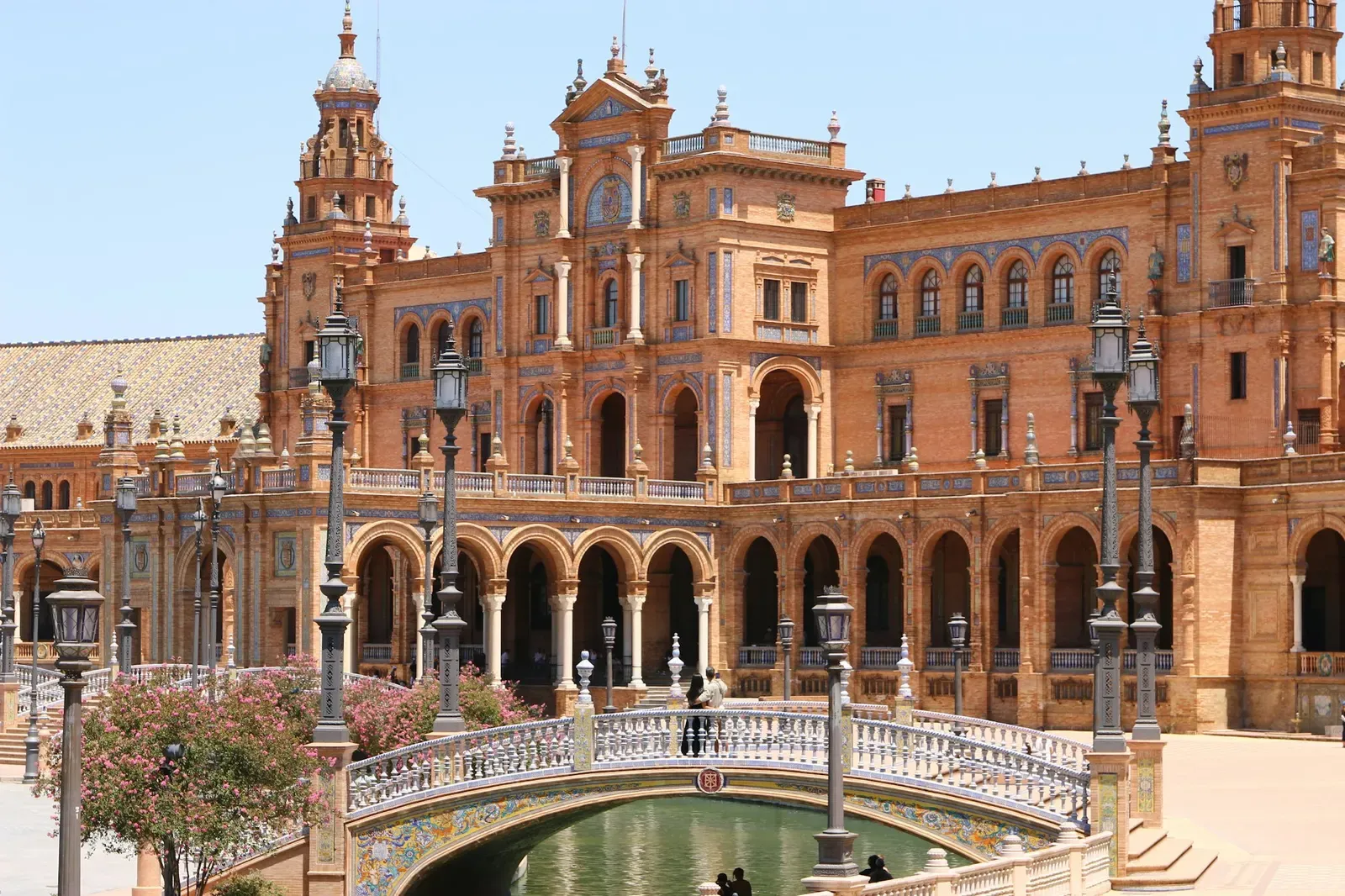
Andalusia is the image of Spain many people carry in their heads: flamenco, orange trees, white villages and Moorish palaces. Granada’s Alhambra, Generalife and Albayzín and Seville’s cathedral, Alcázar and Archivo de Indias are both UNESCO World Heritage sites, and the region’s official tourism board actively promotes Andalusia as a place to get married.
The coast and the interior are very different. Málaga and the Costa del Sol, served by an airport with 26.8 million passengers in 2025, have a mild, dry climate, beach hotels and the glamour of Marbella. Inland, Seville and Granada are spectacular but hot in summer: Seville airport averages 36 °C in July and 32 °C in June, so most couples marry there in April, May or October.
Best for: couples who love Spanish history and architecture, or a Costa del Sol beach wedding, and can avoid the peak of summer inland.
Barcelona and the Costa Brava
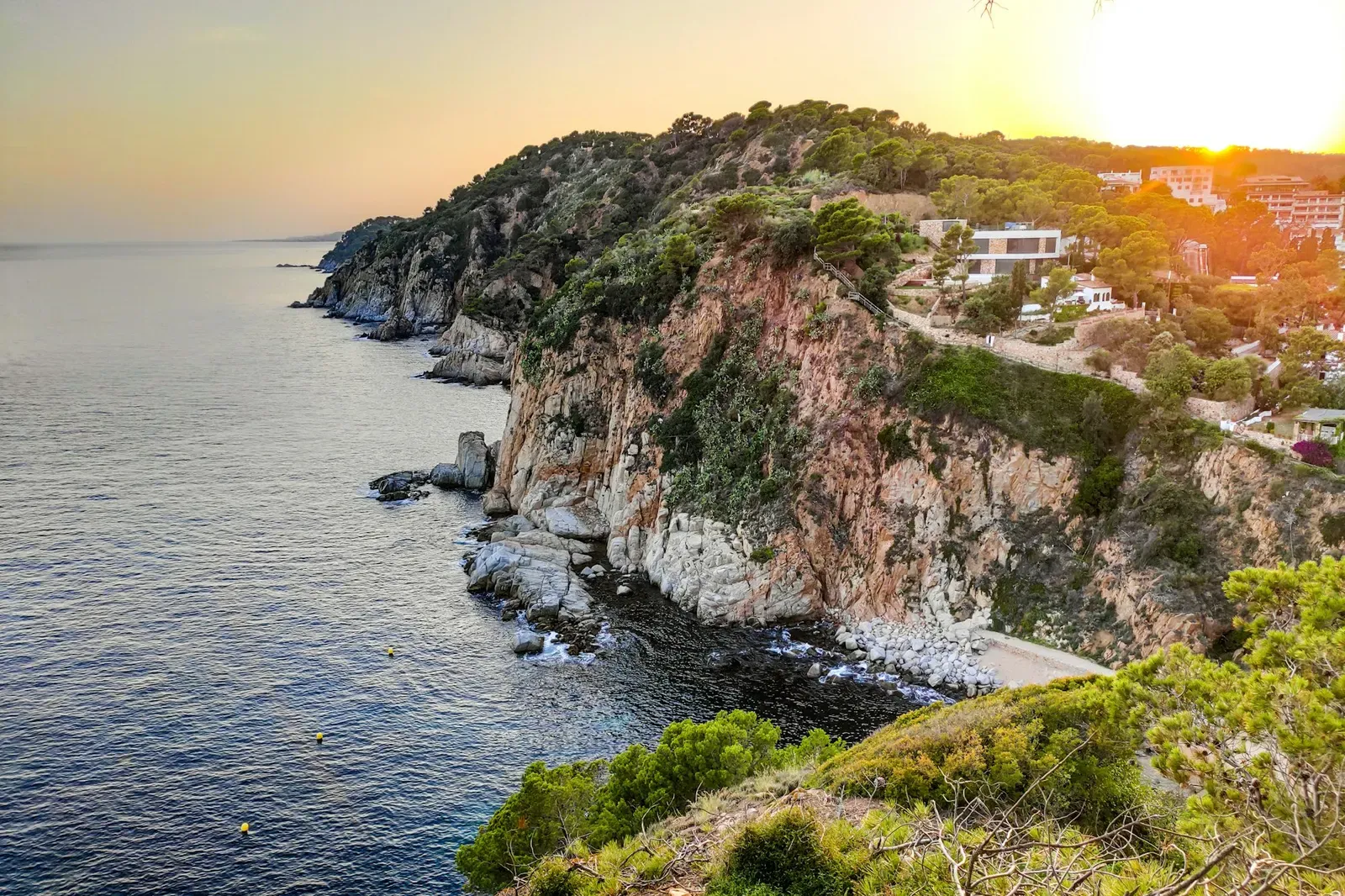
Barcelona offers what few other wedding destinations can: a world-famous city, with Gaudí’s works on the UNESCO list since 1984, and an airport with 57.5 million passengers in 2025. Within a couple of hours’ drive you’ll find the coves and pine-covered cliffs of the Costa Brava, medieval villages and masías (Catalan farmhouses) set among vineyards.
The climate is a little cooler and more humid than in the Balearic Islands, with an average June maximum of 24.9 °C at the airport and more rain days in spring and autumn. City weddings can be logistically complex, and the most beautiful parts of the Costa Brava are further from the airport than most couples expect.
Best for: couples who want a city-break feel for their guests, combined with a celebration on the coast or in the countryside.
Madrid, Toledo and Segovia
Madrid has Spain’s busiest airport, with 68.2 million passengers in 2025 and direct flights from across the world, which makes it practical for couples with guests from the Americas. The capital has palaces, grand hotels and rooftop terraces, and the historic cities of Toledo and Segovia, both UNESCO World Heritage sites, are within easy reach.
Madrid’s climate is continental: hot in summer, with an average July maximum of 32 °C in Retiro Park, and cool in winter. Spring and autumn are the best times for a wedding here. It lacks one thing: the sea.
Best for: city weddings and couples with many guests flying in from outside Europe.
The Basque Country and La Rioja
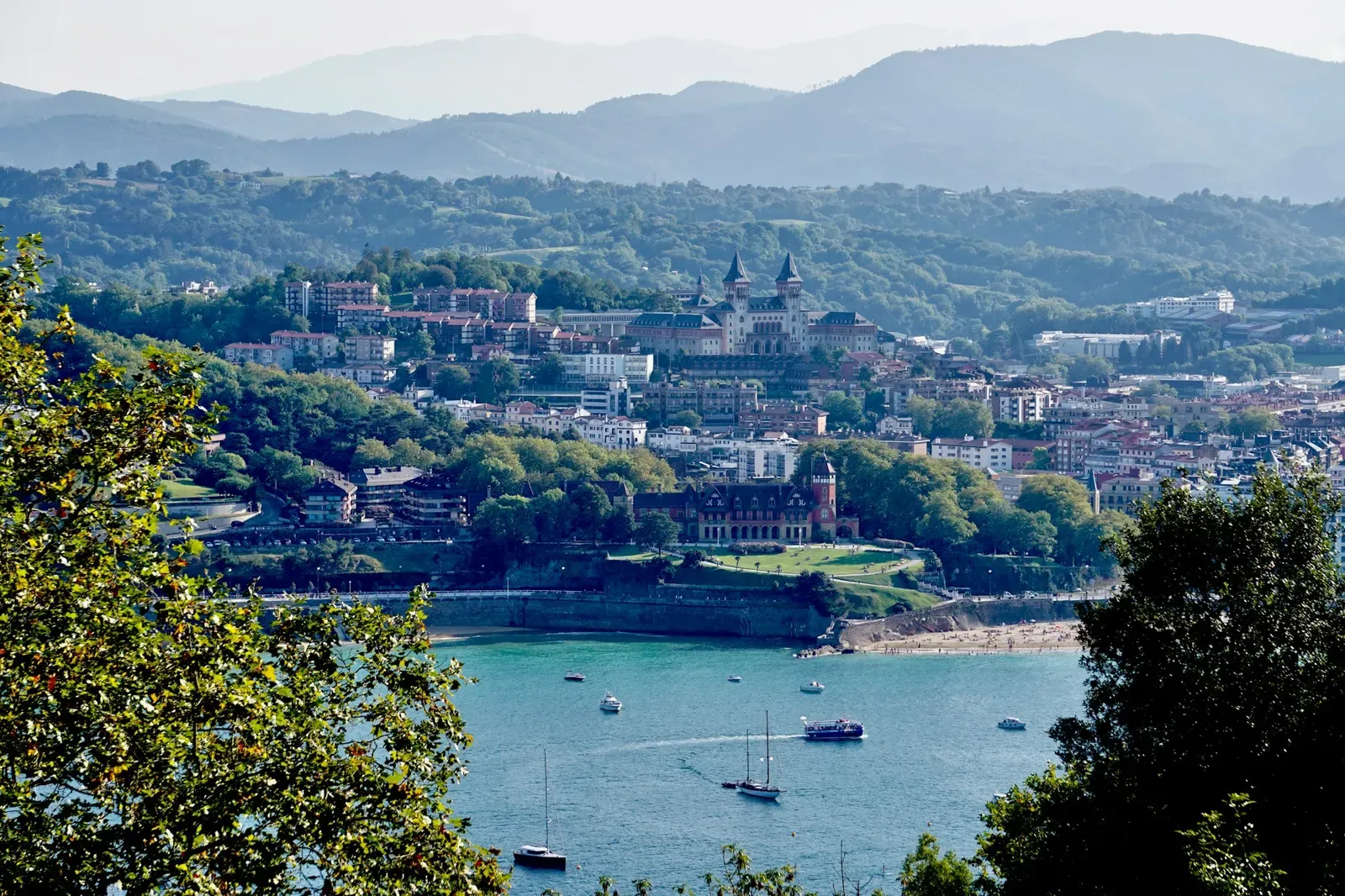
For food and wine lovers, the north of Spain is hard to beat. San Sebastián is famous for its food, the Basque coast is green and dramatic, and La Rioja, a short drive south, is Spain’s best-known wine country.
The catch is the weather. At Igeldo, above San Sebastián, the average June maximum is 20 °C, and there are around ten days of rain in each summer month. That’s perfect for avoiding heat, and wonderful for green landscapes, but every outdoor wedding here needs a serious plan B. San Sebastián’s airport is small, with fewer than half a million passengers in 2025, so many guests fly into Bilbao instead.
Best for: food and wine lovers who prefer mild temperatures and are happy to plan for rain.
The Canary Islands
The Canary Islands are Spain’s answer to a winter wedding, with a mild climate all year round. At Tenerife South airport, the average maximum stays between 24 and 28 °C from May to October, and rain is very rare from May to September. Tenerife’s Teide National Park is a UNESCO World Heritage site, and Lanzarote is a UNESCO Biosphere Reserve with volcanic landscapes unlike anywhere else in Europe. The islands’ official tourism board promotes them as a wedding and honeymoon destination.
The islands are much further from the rest of Europe than the Balearics, so flights are longer, and the landscape is volcanic and dramatic rather than green and Mediterranean. Tenerife South and Gran Canaria airports each handled around 14 to 16 million passengers in 2025.
Best for: weddings between November and April, and couples who love dramatic, volcanic landscapes.
Valencia
Valencia combines a lively city with beaches, rice fields in the Albufera natural park and orange groves inland. Its airport handled 11.8 million passengers in 2025, its climate is close to Mallorca’s, with an average June maximum of 27.1 °C in the city, and it’s the home of paella. The Costa Blanca, further south, adds beach resorts and villas.
Best for: couples who want a Mediterranean city wedding with a relaxed, local feel.
Islands or the mainland?
A wedding on an island has a special quality: once your guests arrive, everyone is in the same place, distances are short and the whole trip feels like a holiday. The Balearic Islands, in particular, combine that feeling with short flights from most European cities. The mainland gives you easier road access, the option of combining the wedding with a road trip, and big cities with direct long-haul flights.
Islands also have practical points to plan for. Rentals, furniture and specialist suppliers often come from a smaller local market, so it pays to book early, and a few things, such as large marquees, may have limited availability in peak season. On the mainland, the challenge is usually distance: a venue an hour and a half from the airport means long transfers for guests.
Why so many couples choose Mallorca
We may be biased, but the numbers back us up. Mallorca combines several things that rarely come together in one place:
- Access. Spain’s third-busiest airport, with direct flights from across the UK and Europe and around 30 to 60 minutes to most venues.
- Reliable weather. Fewer than two rain days on average in June, warm evenings and long daylight hours in early summer.
- Variety in a small area. Mountains, sea, a historic city and countryside estates, all within an hour of each other.
- Choice of venues. From exclusive castle estates to fincas for 400 guests and intimate hotels for 40. Our guide to the best wedding venues in Mallorca shows the range.
- Experienced local suppliers. Caterers, florists, musicians and photographers used to working with international couples, often in English.
- Accommodation for every budget. Luxury hotels, rural estates, villas and city hotels for guests of all ages and budgets.
If you’re right at the start of your planning, our complete guide to getting married in Mallorca walks you through every step, from the legal side to the timeline.
Costs: does the region change the budget?
Yes, but less than the date, the guest count and the style of wedding. Prices in Spain are generally highest in the places with the most international demand, such as Mallorca, Ibiza, Marbella and Barcelona, and in peak season. A Friday wedding in May can cost noticeably less than a Saturday in June at the same venue.
Our guide to how much a wedding in Mallorca costs breaks down typical budgets, line by line, and a realistic budget is one of the first things we build with every couple we work with; you can see what each of our planning packages includes. One cost specific to the Balearic Islands is the sustainable tourism tax, which guests pay per person per night. Under the Balearic law, it ranges from €1 to €4 a night depending on the type of accommodation, with a 75% reduction from November to April, and children under 16 are exempt. The rates may change, so check the current ones before you share them with guests.
Frequently asked questions
Where is the best place to get married in Spain?
It depends on your season and your guests. For a summer wedding with guests from across Europe, Mallorca and the Balearic Islands offer reliable weather and easy access. For history and architecture in spring or autumn, Seville or Granada. For a winter wedding, the Canary Islands.
Can tourists get married in Spain?
Usually not legally. A civil wedding requires at least one partner to live in Spain or be Spanish. Most couples from abroad marry legally at home and hold a symbolic ceremony in Spain, which has no legal requirements. A Catholic wedding may be possible, depending on the parish.
Is it easy to get married in Spain?
A symbolic ceremony is easy: there’s no paperwork, and you can hold it wherever your venue allows. A legal wedding is harder for non-residents. Our guide to getting legally married in Mallorca explains the options.
What is the best month to get married in Spain?
For most of mainland Spain and the Balearic Islands, May, June, September and early October. July and August are very hot inland and busy on the coast. In the Basque Country, summer is best; in the Canary Islands, almost any month works.
Where are the cheapest places to get married in Spain?
Prices are usually lower away from the most international destinations, in inland regions and outside peak season. In popular places like Mallorca, choosing a Friday or Sunday, or May or October, often makes a bigger difference than the region itself.
Mallorca or Ibiza for a wedding?
Ibiza suits couples who want beach clubs and a late party. Mallorca offers more variety, including mountains, historic estates and the city of Palma, plus a much larger airport with more direct flights.
Can we have a beach wedding in Spain?
Yes, but a ceremony on a public beach usually needs permits, and some beaches don’t allow events. Many couples choose a beach club, a hotel or a venue with sea views instead, which avoids the paperwork.
How we can help
We plan weddings in Mallorca, and we know the island inside out: the venues, the suppliers, the rules and the details that photos don’t show. If you’re still deciding where in Spain to get married, we’re happy to tell you honestly whether Mallorca suits the wedding you have in mind.
Take a look at our wedding planning packages, read the questions couples ask us most, find out who we are or tell us about your wedding. Ask us for a quote: it’s free and there’s no commitment.
A note on this guide: climate figures are AEMET’s 1981–2010 normals, and passenger figures are Aena’s final data for 2025. Legal rules and tourist taxes can change, so check the current requirements with the official sources below before you plan.
Sources
- Getting married in Spain, GOV.UK
- Marriage, U.S. Embassy and Consulates in Spain and Andorra
- Marriage, Government of Spain
- Civil Code articles on religious marriage (Spanish), Ministry of the Presidency
- Climate normals for Palma airport, Ibiza airport, Menorca airport, Seville airport, Granada airport, Málaga airport, Barcelona airport, Madrid Retiro, San Sebastián Igeldo, Tenerife South airport and Valencia (Spanish), © AEMET
- Monthly traffic statistics, 2025 and 2025 press release (Spanish), Aena
- Cultural Landscape of the Serra de Tramuntana, Ibiza, Biodiversity and Culture and Alhambra, Generalife and Albayzín, Granada, UNESCO World Heritage Centre
- World Heritage sites in Spain (Spanish), Permanent Delegation of Spain to UNESCO
- Menorca and Lanzarote biosphere reserves, UNESCO
- Law 2/2016 on the tourist stay tax in the Balearic Islands (Spanish), BOE
- Andalucía, a destination to get married (Spanish), Andalusia Tourism
- Weddings in the Canary Islands, Canary Islands Tourism
Photography: David Vives, Luis Gonçalves, Joshua Kettle, Jonas Verstuyft, Quick PS and juan pablo rodriguez, via Unsplash.