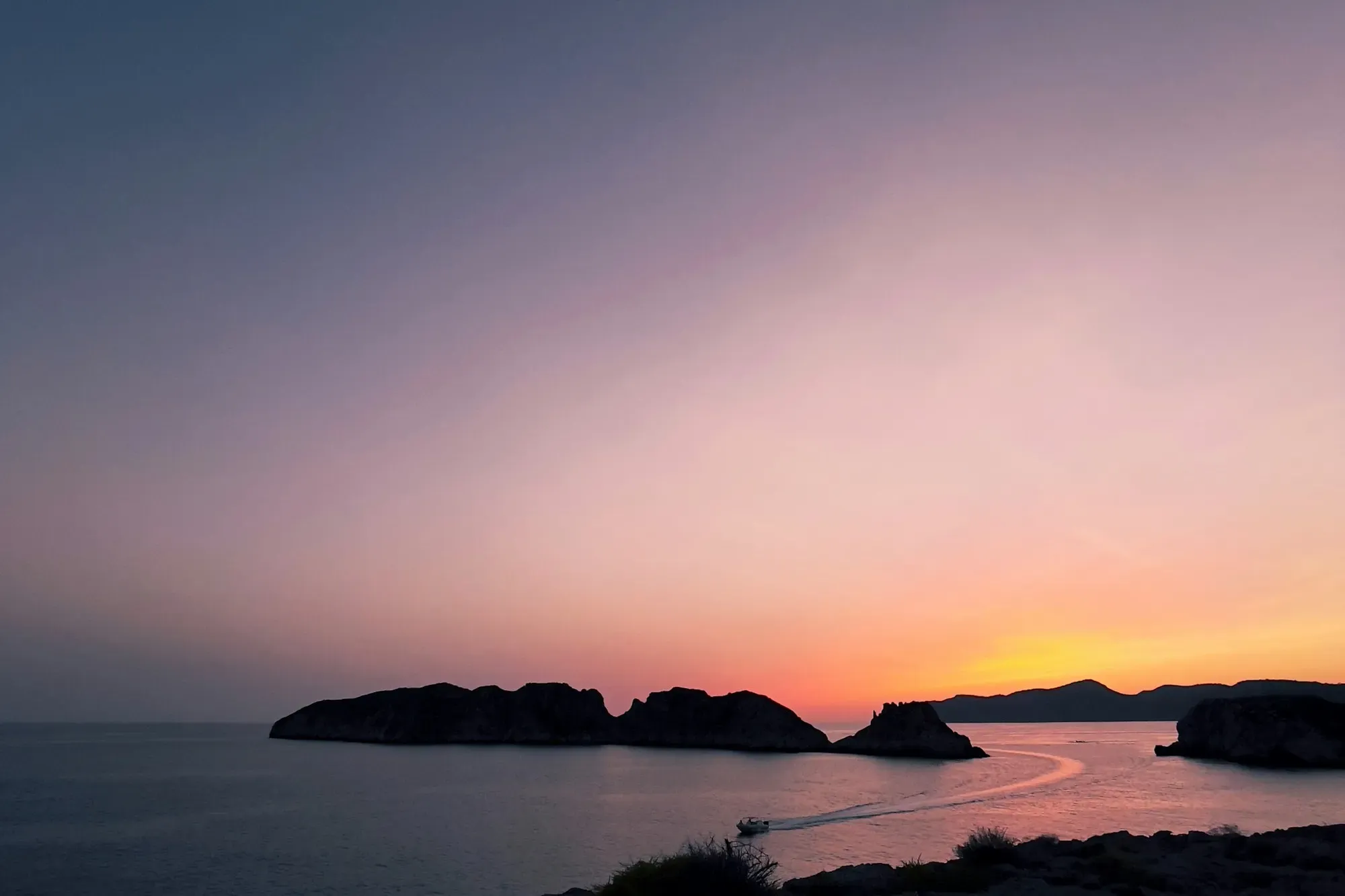
A Mallorca wedding is one of the easiest destination weddings in Europe to fall in love with, and one of the easiest to underestimate. The island has the light, the food, the mountains, the coves and the venues. What it also has is a set of rules, seasons and habits that couples planning from London, New York or Sydney rarely know about until they’re already halfway in.
This guide is the starting point for getting married in Mallorca if you live abroad. It covers the whole picture in one place: whether your wedding can be legally binding, when to marry, which part of the island suits you, what it really costs, how to plan it from home and how to look after guests who are flying in. Where a subject deserves more depth, we’ve written a full guide to it and link to it as we go. And if you haven’t yet decided on Mallorca, our comparison of where to get married in Spain looks at nine regions side by side.
It’s written by The Vow Producers, a wedding planner in Mallorca, from the questions couples ask us most before they book.
The short answer
If you only have a minute, this is what you need to know about a wedding in Mallorca:
- Most couples from abroad don’t marry legally on the island. A Spanish civil wedding needs at least one of you to live in Spain or be Spanish. The usual solution is to sign the legal papers at home and hold a symbolic ceremony in Mallorca. A Catholic church wedding is the one legally binding option open to non-residents.
- The best months are late May to June and mid-September to mid-October. July and August work well for evening weddings; winter is quiet, cheaper and cooler.
- There are five main kinds of venue: fincas (country estates), historic houses in Palma, hotels, beach clubs and private villas, each with very different rules.
- A realistic budget for 100 guests is roughly €70,000 to €140,000 including VAT, with smaller and larger weddings either side of that.
- Start 12 to 18 months ahead for a Saturday between May and October.
- Plan for a weekend, not a day. Most guests fly in for two or three nights, and many couples host a welcome event and a farewell as well as the wedding.
The rest of this guide explains each point and what it means for your planning.
Why couples from abroad choose a Mallorca wedding
Mallorca is the largest of the Balearic Islands, and it packs a remarkable range of settings into a short drive. In a single morning you can go from the Gothic cathedral in Palma to a stone farmhouse among olive and almond trees, and on to a cliff above the sea in time for sunset.
Easy to reach
Getting your guests to the island is simpler than for most destination weddings. Palma de Mallorca airport handled 33.8 million passengers in 2025, according to Aena, the Spanish airport operator, and the United Kingdom was its second-largest international market after Germany, with almost six million passengers. In practice that means frequent direct flights from many UK and Irish airports, a short flight time and fares that most guests can manage.
From the United States it’s a longer journey, usually with a connection in a European hub. United Airlines has announced the return of its seasonal Newark–Palma route for summer 2027, as reported by the Majorca Daily Bulletin. Schedules change from year to year, so check the airline’s own timetable before you tell guests how to travel.
Landscapes that do the decorating for you
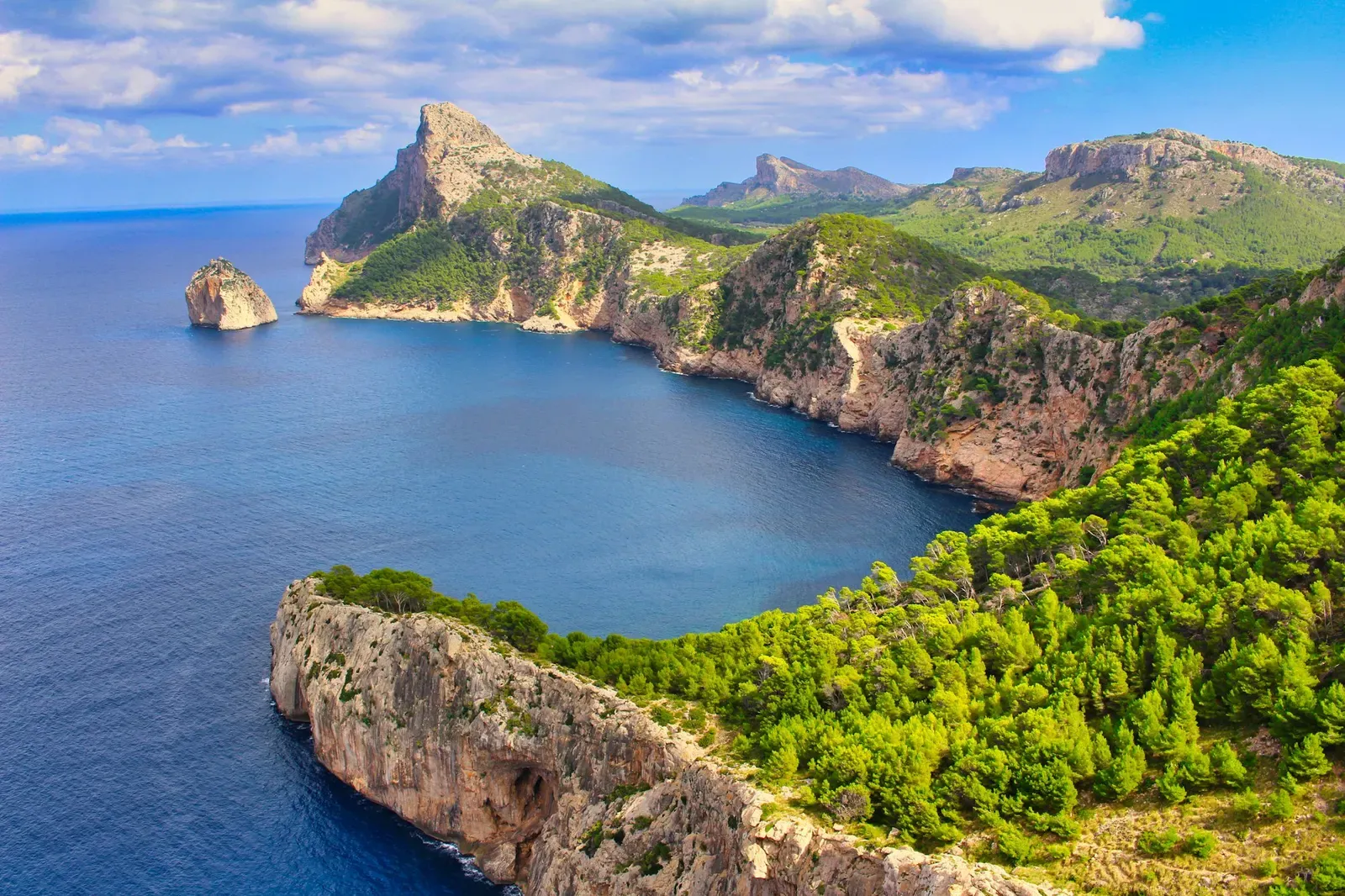
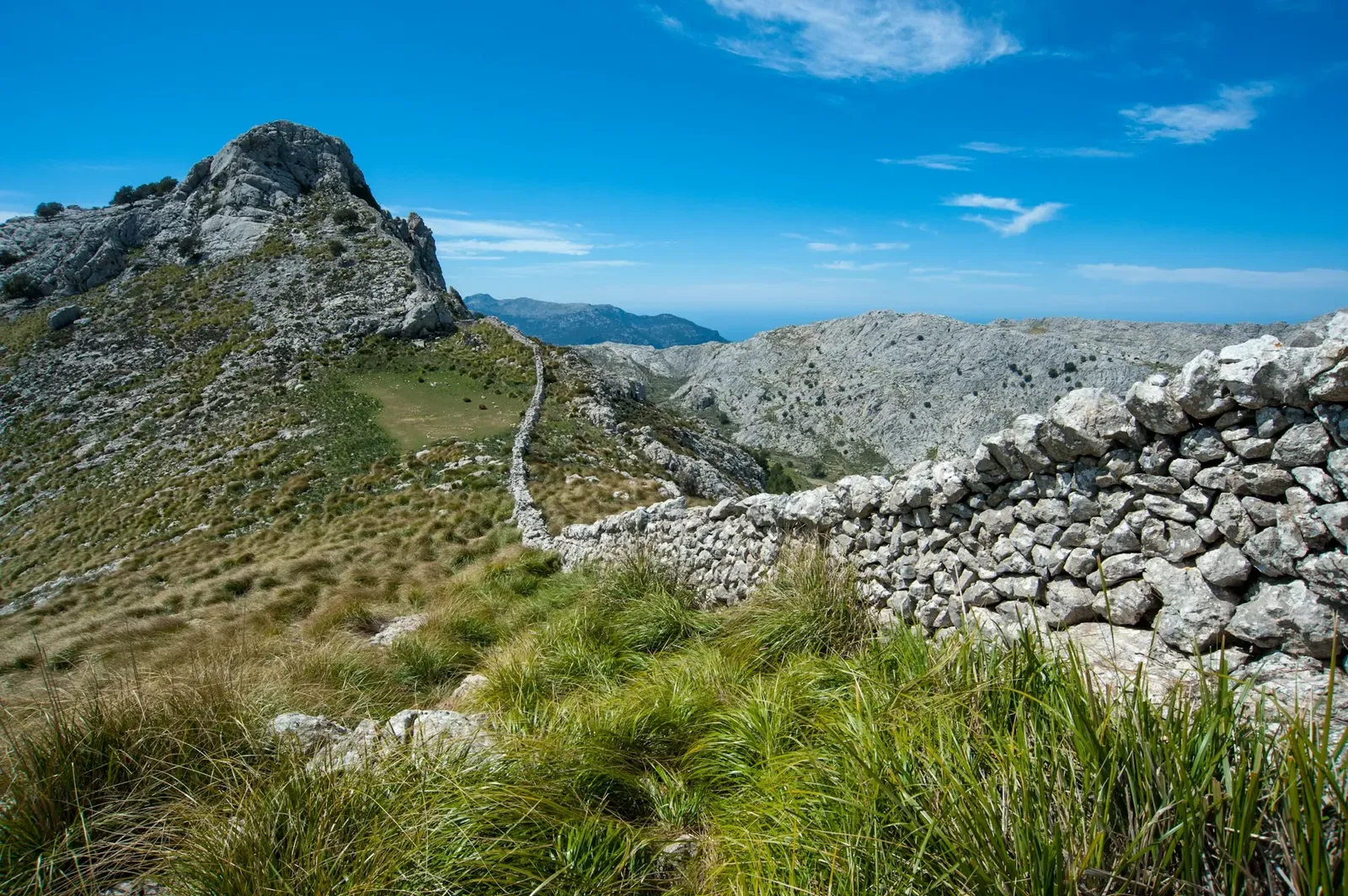
The Serra de Tramuntana, the mountain range that runs along the island’s north-west coast, is listed by UNESCO as a World Heritage cultural landscape, recognised for its terraces, dry-stone walls and centuries of farming in steep terrain. Inland, the central plain is a patchwork of vineyards, almond groves and small towns. The coast moves between long sandy bays, rocky coves and dramatic headlands such as Formentor. Whatever style you have in mind, there’s a backdrop for it.
A mature wedding industry
Because the island has hosted international weddings for decades, it has the suppliers to match: caterers used to cooking for 150 guests in a field, furniture and lighting companies, florists, celebrants who work in English, photographers, musicians and transport firms. That depth makes a big difference when you’re planning from another country, because you aren’t relying on a single supplier to improvise.
Can you legally get married in Mallorca?
This is the first question to settle, because it shapes your timeline and your ceremony. Our guide to getting legally married in Mallorca covers every route in detail; here is the summary.
The three routes
- A Spanish civil wedding. Only possible if at least one of you is a Spanish national or lives in Spain. Two visitors can’t book a civil ceremony at a town hall in Mallorca. GOV.UK’s guidance on getting married in Spain sets out the same rule for British nationals.
- A Catholic church wedding. Legally valid in Spain with no residency requirement, provided at least one of you is Catholic and the Church paperwork, which starts with your parish at home, is completed in time.
- Legal at home, celebration in Mallorca. You marry legally in a short ceremony at home, before or after the trip, and hold your full wedding in Mallorca as a symbolic ceremony led by a celebrant. This is what most international couples choose.
What a symbolic ceremony means for you
A symbolic ceremony can be held anywhere your venue allows: under an olive tree, on a terrace above the sea or in a courtyard in Palma. You write it the way you want, in whatever languages you need, with readings, rituals and vows that mean something to you. The only thing it doesn’t do is make you legally married in Spain. Plan your legal ceremony at home early, because notice periods apply: in England and Wales, for example, you must give notice at least 29 days before the wedding, according to GOV.UK.
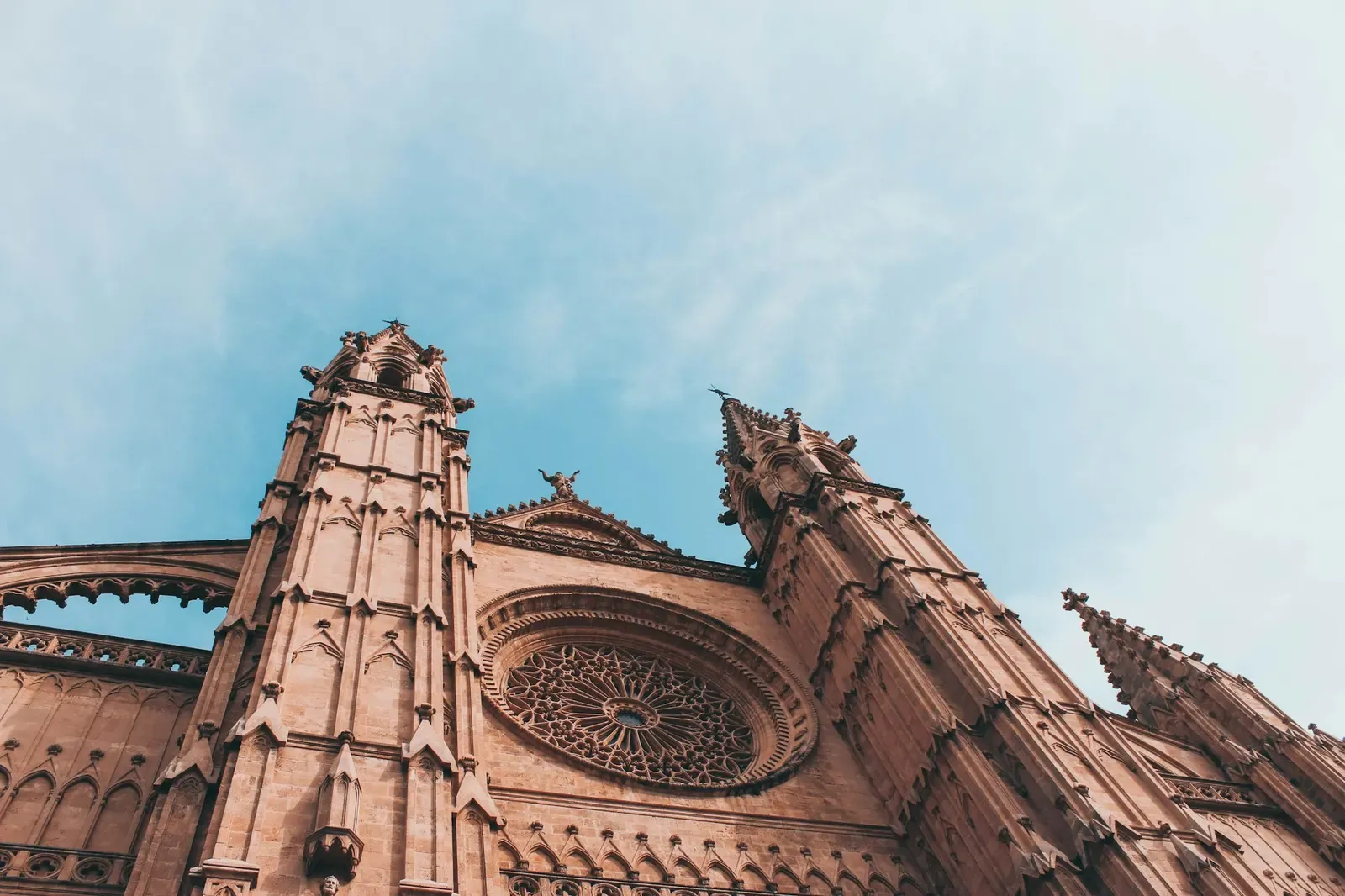
If one of you is Catholic and a church wedding matters to you, Mallorca has beautiful churches, and Palma Cathedral does host weddings, within its own rules and availability. Allow nine to twelve months for the paperwork.
When to get married in Mallorca
Weather, prices, availability and your guests’ travel all change with the season. Our month-by-month guide to the best time to get married in Mallorca has the climate figures and the detail; the essentials are below.
| Season | What to expect | Best for |
|---|---|---|
| Late May–June | Warm, dry, long evenings; sunset after 9 p.m. in June | Classic outdoor weddings |
| July–August | Hot days, busiest season, highest demand | Evening weddings and pool parties |
| September–mid-October | Warmest sea, softer light, a slightly higher chance of storms | Sea-view and finca weddings |
| Late October–April | Cooler, quieter, more rain; many hotels close in winter | Intimate weddings and better value |
Two things are easy to forget. First, Spanish summer days are hot, so a ceremony at 1 p.m. in July is hard on everyone; most couples marry in the late afternoon and dine after sunset. Second, Saturdays from May to October are the first dates to go at popular venues, so a Friday or Sunday can open up options and lower prices.
Where on the island to get married
Driving from one end of Mallorca to the other can take well over an hour, so where you marry affects your guests’ hotels, their transport and the feel of the whole weekend. Our guide to Mallorca wedding venues goes into each area in more depth.
The Serra de Tramuntana
Deià, Valldemossa, Sóller and Fornalutx sit among mountains, terraces and stone villages, with the sea below. It’s the most romantic part of the island and the most demanding logistically: roads are narrow and winding, coaches are limited in some villages, and venues tend to be smaller.
Palma and the south-west
The capital has historic palaces, courtyards, rooftop terraces and the cathedral, plus the widest choice of hotels for guests. The south-west coast adds beach clubs and hotels by the sea. It’s the easiest base for guests who want to explore, eat out and get to the airport quickly.
The central plain
The area known as Es Pla is quieter, greener in spring and full of fincas with space for large weddings, vineyards and long dinners outdoors. Distances to Palma and the airport are reasonable, and venues often have room for guests to stay on site.
The north
Pollença and Alcúdia have a relaxed, family feel, with old towns, bays and the Formentor peninsula nearby. It’s a good choice for a weekend where guests want a beach holiday around the wedding, though it’s further from the airport.
The east and south-east
Artà, Santanyí and the coves of the east coast offer turquoise water, golden stone towns and rural estates. Expect longer transfers from the airport and plan guest transport carefully.
Choosing your wedding venue
Once you know the season and the area, the venue follows. Most international couples choose between five types:
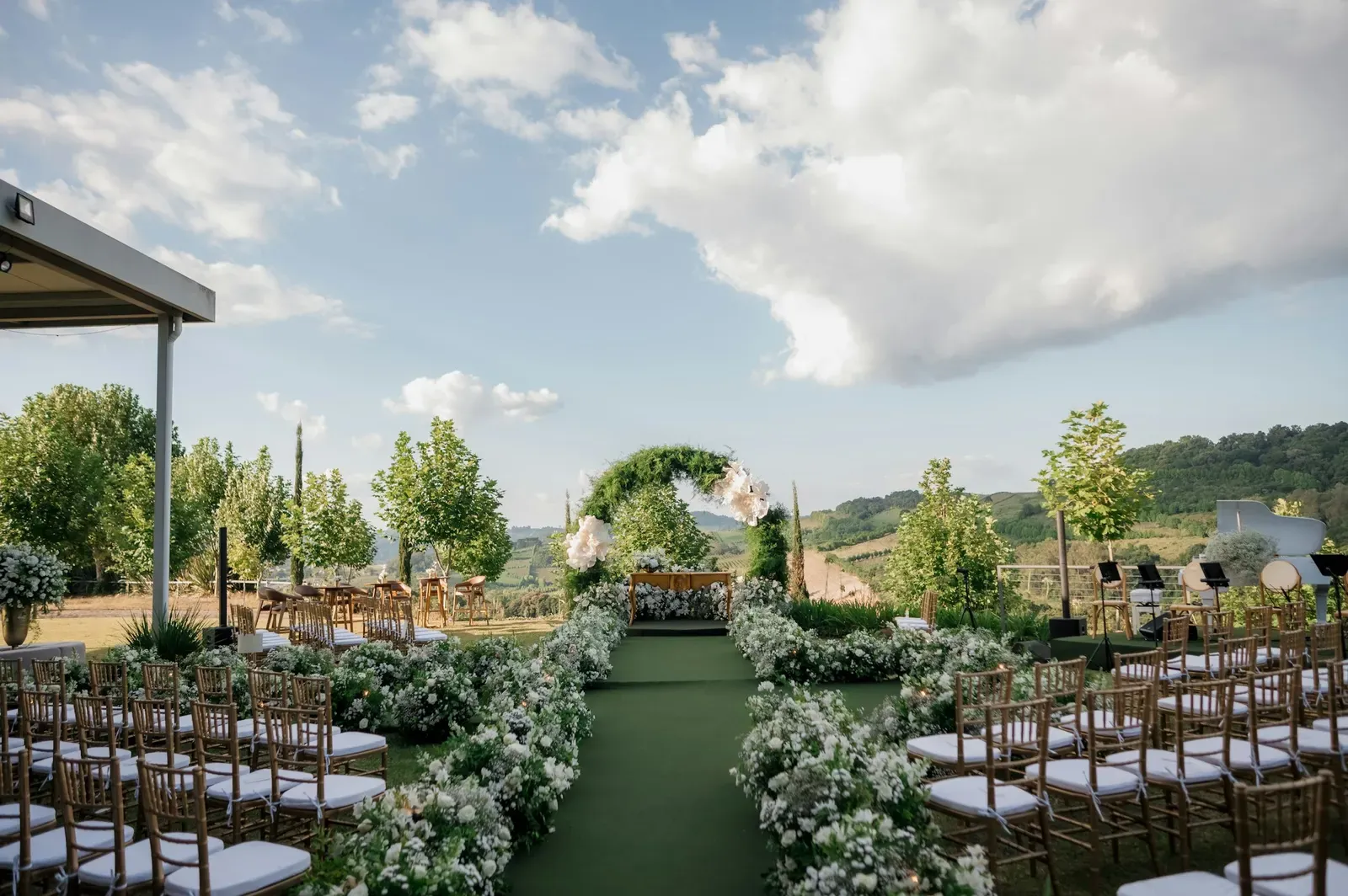
- A finca or country estate. The classic Mallorca wedding: space, privacy and views, often with exclusive use. Many are “dry hire”, meaning you bring in your own caterer, furniture, lighting and toilets.
- A historic house or palace in Palma. Elegant and central, ideal for city weddings and smaller guest lists.
- A hotel or resort. Rooms, catering and spaces in one place, with less flexibility and set suppliers.
- A beach club or seafront restaurant. The sea as backdrop, usually with strict rules on numbers, timings and music.
- A private villa. Personal and intimate, but only if the property is legally allowed to host events, which many holiday rentals are not.
Before you fall for photos, ask four questions: how many guests you’re inviting, whether you want them to sleep on site, how much of the day the venue includes, and how late you want to dance. Those answers rule out more venues than any mood board. When you’re ready for names, our list of the best wedding venues in Mallorca covers 30 fincas, hotels and estates, area by area.
How much does a Mallorca wedding cost?
The figures below come from our detailed guide to the cost of a wedding in Mallorca, which breaks down every category and builds sample budgets. They are realistic all-in ranges including VAT for the kind of wedding most international couples have in mind:
| Wedding | Guests | Typical all-in range |
|---|---|---|
| Intimate wedding | Around 50 | €40,000–85,000 |
| One-day wedding | Around 100 | €70,000–140,000 |
| Full wedding weekend | Around 150 | €150,000–315,000 |
Three things move these numbers more than anything else: your guest count, your date and your venue. Catering and drinks are usually the largest single line, followed by the venue, furniture and lighting. Spanish VAT (IVA) is 21% on most wedding services and usually 10% on catering and passenger transport, and suppliers don’t always quote with it included, so ask every time.
A simpler, smaller celebration can come in well below these ranges, and a wedding at one of the island’s five-star resorts can go well above them. The point of a budget isn’t to hit an average; it’s to decide where your money goes first.
Planning your Mallorca wedding, step by step
Here is the order we recommend for a wedding between May and October. For a date in the low season, or a Friday or Sunday, you can often compress the first stages.
18 to 12 months before
- Agree your rough guest count and budget. Everything else depends on these two numbers.
- Decide on your legal route: church, civil (if one of you lives in Spain) or legal at home with a symbolic ceremony in Mallorca.
- Choose your season and the area of the island.
- Visit venues, ideally on a three- or four-day trip with several viewings, and book yours.
- Book your planner, if you’re using one, and then the suppliers that sell out first: photographer, caterer (if your venue doesn’t include one) and celebrant.
- Send save-the-dates, especially if guests are flying long-haul.
12 to 6 months before
- Build a design concept and confirm your florist, furniture and lighting.
- Book music, hair and make-up, and videography.
- Set up a wedding website with travel information, hotel suggestions and RSVPs.
- Arrange guest transport and, for a weekend, plan the welcome and farewell events.
- If you’re marrying in church, open your prenuptial file with your home parish.
6 to 2 months before
- Hold a tasting and finalise the menu, wines and drinks.
- Send formal invitations and chase RSVPs.
- Agree the run of show for the day and a plan B for wind, rain or heat.
- Book your legal ceremony at home and give notice at the right time.
The final weeks
- Confirm final numbers with every supplier and share a single schedule with all of them.
- Finish the seating plan, place cards and signage.
- Pack what you’re bringing from home, from rings to vows.
- Arrive on the island a few days early, if you can, for a final meeting and a walk-through at the venue.
Planning from abroad: how it works in practice
Planning a wedding in a country where you don’t live is very doable, but it works differently from planning one at home.
Visits and video calls
Most couples make one planning trip to choose a venue and meet key suppliers, and sometimes a second for a tasting or a final walk-through. Everything else happens by video call, email and shared documents. Plan your visit for the same season as your wedding if you can, so you see the light, the heat and the sunset time you’ll actually have.
Contracts, deposits and payments
Suppliers in Mallorca usually ask for a deposit to secure the date and the balance in the weeks before the wedding. Read each contract for what happens if you change numbers, move the date or cancel, and keep track of which quotes include VAT. Pay attention to exchange rates if your budget is in pounds or dollars: a few cents of movement over a year can add up on a six-figure wedding.
Language
Many suppliers who work with international couples speak English, but not all, and contracts may be in Spanish. If you aren’t fluent, have someone you trust read them, or work with a planner who handles contracts in both languages.
Trusting suppliers you’ve never met
Ask for full galleries rather than highlights, references from couples who married in a similar venue and season, and clear written proposals. A good supplier is happy to put what’s included in writing.
Looking after your guests
At a destination wedding, guests give up time and money to be there. A little organisation on your side makes their trip far easier.
Flights and travel documents
Share your date early and suggest the best airports and arrival days. Remind guests to check entry requirements for Spain before they book: UK travellers should read GOV.UK’s travel advice for Spain, which covers passport validity rules and the new EU border checks, and US travellers the US State Department’s page on Spain. These rules have been changing, so ask guests to check again shortly before travelling.
Accommodation
Suggest two or three places to stay at different prices, ideally close to the venue or to each other. For a peak-season weekend, book room blocks early, as hotels near popular venues fill quickly. Remember that the Balearic Islands charge a sustainable tourism tax per person per night on top of the room rate; the amount depends on the type of accommodation and the season, and children under 16 don’t pay it, according to the Spanish Ministry of Finance summary of the tax. It’s worth mentioning on your wedding website so nobody is surprised at checkout.
Transport
Many fincas are down country lanes with little parking, and taxis can be hard to find late at night, especially in summer. Organised coaches or minibuses from a few pick-up points are safer, kinder to the neighbours and usually cheaper than everyone driving. Plan return trips at staggered times so guests can leave when they want.
Information
A wedding website with timings, addresses, dress code, transport and a few tips for the island answers most questions before they’re asked. Add a note on the heat and footwear if your ceremony is on grass or gravel.
The Mallorca wedding weekend
Because guests travel, most weddings in Mallorca become a weekend. A typical shape looks like this:
The welcome event
An informal evening the day before the wedding: drinks at a beach club, a dinner in a Palma restaurant or a relaxed party at the venue. It lets guests meet each other, takes the pressure off the big day and gives you real time with people you may not have seen for years.
The wedding day
A late-afternoon ceremony, cocktails as the heat fades, dinner after sunset and dancing into the night, within the venue’s music hours. Spanish timings run later than British or American ones, and long dinners outdoors are part of the charm.
The farewell
A brunch, a beach day or a long lunch the day after, for whoever is still standing. It’s often the most relaxed event of the weekend and the one guests remember fondly.
Not every couple needs three events, but planning them together, with one schedule, one transport plan and one team, makes the whole weekend run more smoothly.
Rules and practicalities worth knowing
A few local rules catch couples out every year. None of them is a problem if you know about them early.
Music hours
Most venues have a time when outdoor music must stop, set by their licence and local rules, and some have an indoor space where the party can continue. Ask every venue for its end times in writing before you book.
Fire season
In the Balearic Islands, lighting fires on forest land, or within 500 metres of it, is prohibited from 1 May to 15 October, and the regional government advises caution with fireworks and flames near any area at risk. That affects candles outdoors, sky lanterns, sparklers and fireworks at many rural venues.
Beaches and public spaces
A ceremony on a public beach usually needs a permit from the town hall, and sometimes from the coastal authorities, and some beaches don’t allow events at all. A beach club or a private terrace by the sea is often the simpler way to get the same view.
Private villas
Holiday rentals need specific permission to host events, and owners have faced heavy fines and licence withdrawal for illegal parties. Before you book a villa for your wedding, ask for written confirmation that events are allowed and for the maximum number of guests.
Mallorca wedding ideas that feel local
The most memorable weddings on the island borrow from it rather than import a look from elsewhere. A few ideas that suit Mallorca:
- Food that tells guests where they are. Island cheeses, sobrassada, local olive oil, fresh fish and ensaïmada (the spiral pastry Mallorca is known for) all work beautifully on a menu or a late-night table.
- Island wines. Mallorca has its own wine regions, so ask your caterer for local reds, whites and rosés alongside your favourites.
- Olive and almond trees. Many fincas are surrounded by them. They make a natural ceremony setting with very little added decoration.
- Dry-stone walls and natural textures. Linen, rattan, terracotta and local ceramics fit the island’s stone architecture better than heavy, formal styling.
- Long tables under the sky. Dinner outdoors in the warm evening air is one of the great pleasures of a Mallorca wedding.
- Golden-hour portraits. Build twenty minutes into the timeline for photos as the sun goes down. In June, that can be after 9 p.m.
- Gifts from the island. Small bottles of olive oil, local salt or sweets make favours that guests actually use.
Do you need a wedding planner in Mallorca?
You don’t have to have one. Some couples plan successfully on their own, especially for a small wedding at a hotel that includes most services. But for a finca wedding, a weekend with several events, or any wedding planned from another country, a local planner usually saves more stress and money than they cost: they know which venues fit your numbers, which suppliers deliver, what the rules are and what a fair price looks like.
At The Vow Producers, Clari plans and produces weddings across Mallorca for couples from the UK, the US and beyond. Our wedding planning services range from on-the-day coordination to full planning of a wedding weekend, with packages from €2,900 + VAT. Each package lists exactly what’s included, from meetings to hours on the day, and what isn’t. The details on our website are for guidance only; your signed contract is what counts.
Frequently asked questions
Can you get married in Mallorca if you’re not a resident?
You can celebrate your wedding in Mallorca whatever your nationality. A legally binding Spanish civil wedding requires at least one of you to be Spanish or live in Spain, so most couples from abroad marry legally at home and hold a symbolic ceremony on the island. A Catholic church wedding is the exception: it’s legally valid without residency, as long as the Church requirements are met.
How much does a wedding in Mallorca cost?
For around 100 guests, a realistic range is €70,000 to €140,000 including VAT. An intimate wedding for 50 guests often costs €40,000 to €85,000, and a full weekend for 150 guests can reach €150,000 to €315,000. Smaller, simpler celebrations can cost less.
Is a symbolic wedding in Mallorca legally binding?
No. A symbolic ceremony is a full, personal wedding ceremony, but it has no legal effect in Spain. You make your marriage legal in your home country, before or after the trip.
What is the best month to get married in Mallorca?
June and September are the most popular, with May and early October offering a good balance of weather and value. July and August suit evening weddings; November to March suits intimate ones.
Can we get married on a beach in Mallorca?
Public beaches usually need a permit from the town hall, and sometimes from the coastal authorities, and some don’t allow events at all. Many couples choose a beach club, a hotel terrace or a finca with sea views instead.
How far in advance should we plan a Mallorca wedding?
For a Saturday between May and October, start 12 to 18 months ahead. For a weekday or a date in the low season, 9 to 12 months is often enough. A church wedding needs its paperwork started at least nine months before.
Can you get married in Palma?
Yes. Palma has historic palaces, hotels, rooftop terraces and churches, including the cathedral, which hosts weddings under its own rules. A Palma wedding also makes life easy for guests, with plenty of hotels and restaurants and the airport close by.
How we can help
If you’re starting to plan your Mallorca wedding, tell us your date, your guest count and what you have in mind. We’ll reply with honest advice about what’s possible, what it’s likely to cost and how we can help. Get in touch here, read more about Clari and The Vow Producers, or browse our frequently asked questions.
Planning a wedding in Mallorca? Ask us for a quote: it’s free and there’s no commitment, and we’ll reply with availability and first ideas.
Sources
- Palma de Mallorca airport closes 2025 with 33.8 million passengers (Spanish), Aena
- United Airlines’ flights from New York to Palma to start at Easter in 2027, Majorca Daily Bulletin
- Cultural Landscape of the Serra de Tramuntana, UNESCO World Heritage Centre
- Getting married in Spain, GOV.UK
- Marriages and civil partnerships in England and Wales, GOV.UK
- Spain travel advice: entry requirements, GOV.UK
- Spain international travel information, US Department of State
- Tax on tourist stays in the Balearic Islands (Spanish), Spanish Ministry of Finance
- Recommendations in the forest (Spanish), Government of the Balearic Islands
- Weddings at the cathedral, Catedral de Mallorca
Photography: Yannis Abelas, DJ Nick Otronic, Mathilde Cureau, Jonathan Borba and Crispin Jones, via Unsplash.