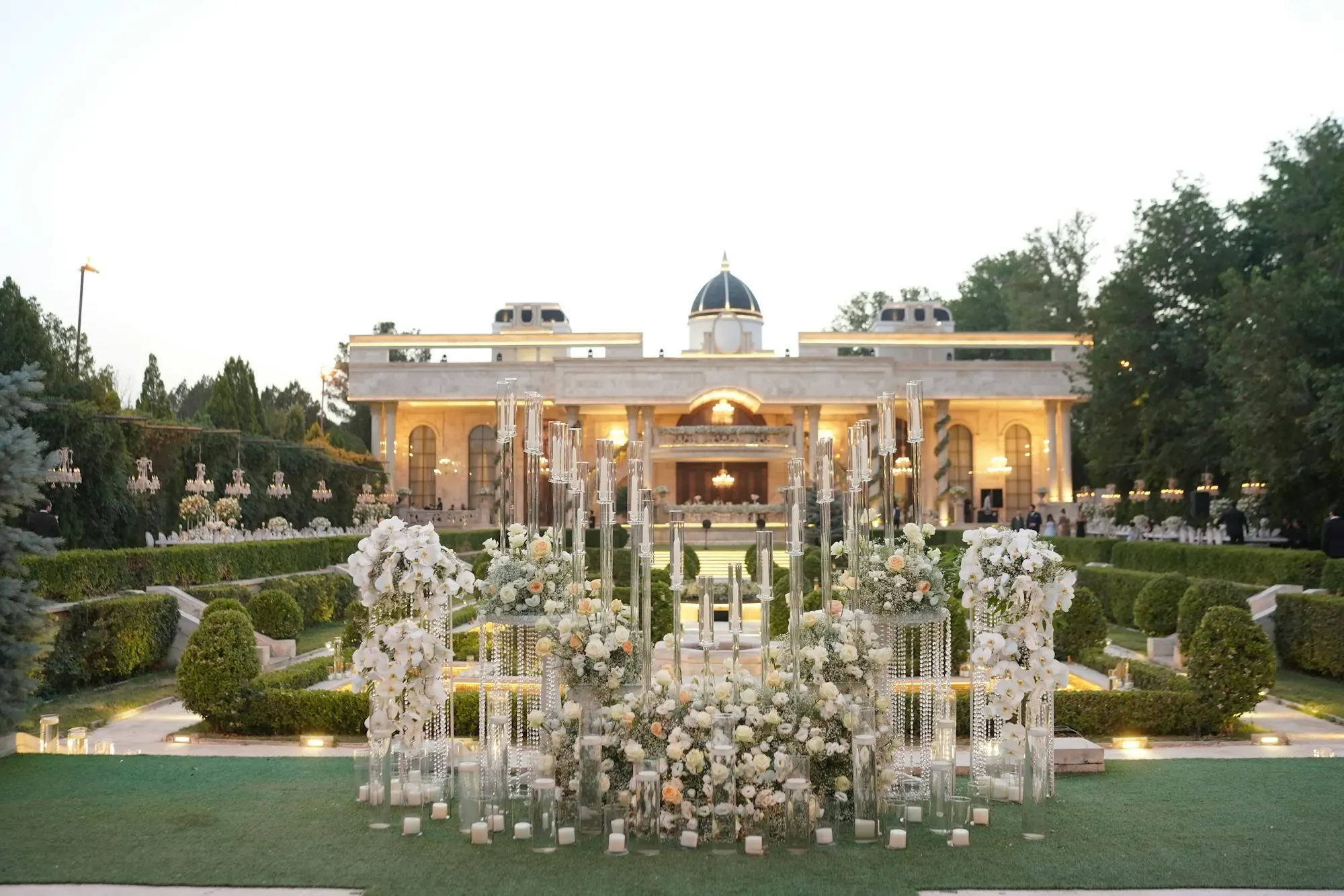
The venue is usually the first thing couples book, and the decision that shapes everything else: the date, the guest list, the budget, the look of the day and even what your guests remember about the island. Mallorca has an extraordinary choice of wedding venues, from stone fincas among olive groves to clifftop hotels, palaces in Palma’s old town and beach clubs on the edge of a turquoise cove.
That choice is also what makes it hard. Venues on the island work in very different ways, with different prices, rules and levels of service, and photos rarely tell you what you need to know. This guide explains the main types of venue, the best areas of the island, what venue hire typically costs and the questions to ask before you sign anything. If you’re just starting out, our complete guide to getting married in Mallorca gives you the whole picture first. When you’re ready for names, our list of the best wedding venues in Mallorca brings together 30 fincas, hotels and estates, area by area.
We’re The Vow Producers, a wedding planner in Mallorca, and helping couples choose their venue is the first job we take on for most weddings.
The short answer
Most international couples choose one of five kinds of venue in Mallorca:
- A finca or country estate: the classic Mallorca wedding. Space, privacy, olive trees and mountain views, often with exclusive use. You usually bring in your own caterer, furniture and lighting.
- A historic house or palace in Palma: elegant courtyards and terraces in the old town, ideal for city weddings and smaller guest lists.
- A hotel or resort: everything in one place, from rooms to catering, with less flexibility and, at the top end, exclusive-use prices to match.
- A beach club or seafront restaurant: the sea as your backdrop and a relaxed atmosphere, usually with strict rules on numbers, timings and music.
- A private villa: intimate and personal, but only if the property is legally allowed to host an event, which many holiday rentals are not.
The right one depends less on photos than on four questions: how many guests you’re inviting, whether you want them to stay on site, how much of the day you want included, and how late you want to party.
The main types of wedding venue in Mallorca
Fincas and country estates
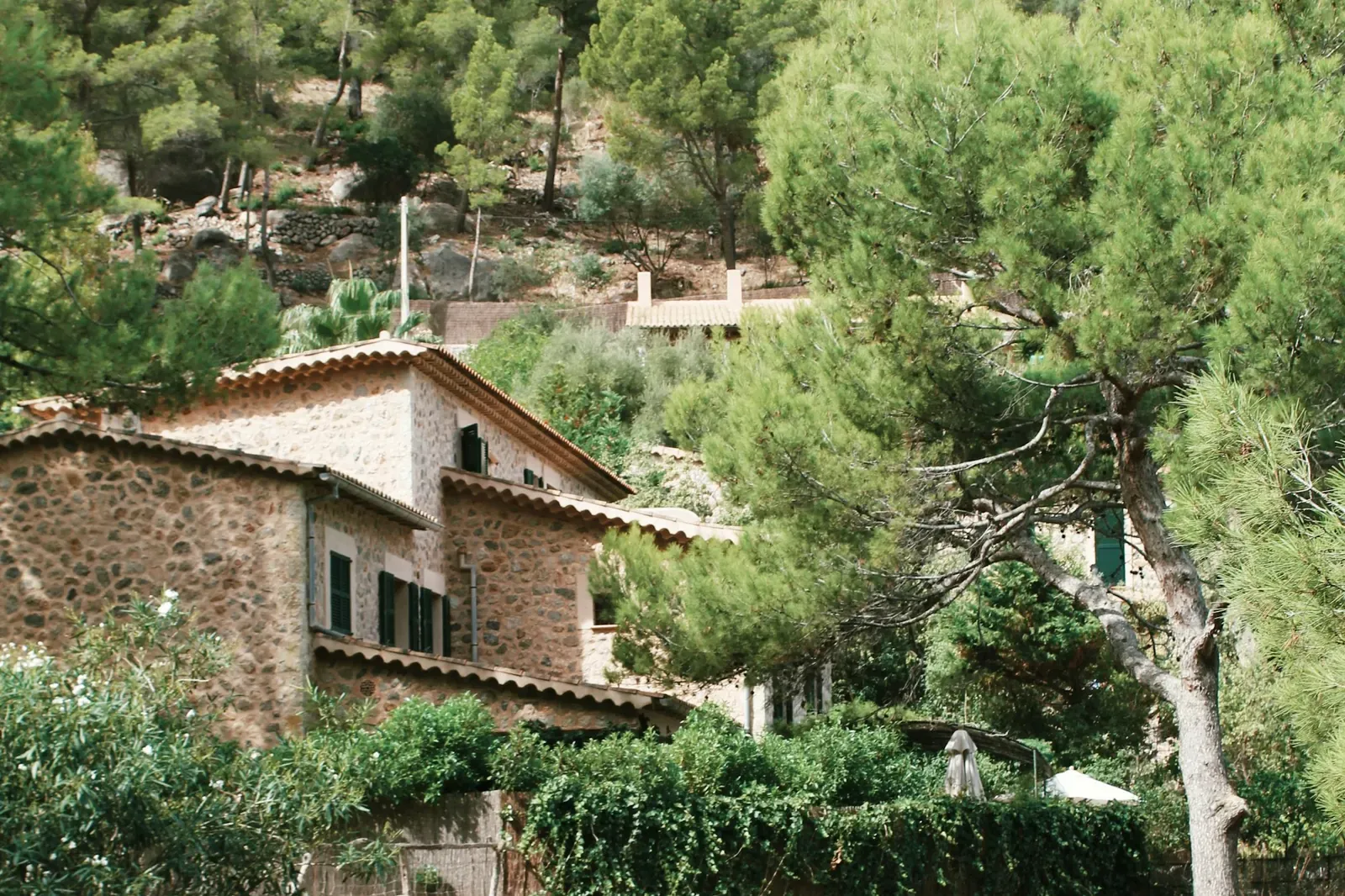
A finca is a rural estate, and many of Mallorca’s most beautiful wedding venues are historic farmhouses and manor estates (known locally as possessions) that have been restored for events. Some date back centuries: mallorca.com mentions estates near Binissalem first documented in 1285 and others near Bunyola with roots in the 13th century.
Fincas offer what most couples imagine when they think of a Mallorca wedding: a ceremony under an old olive or carob tree, a long dinner on a terrace, and a party that doesn’t disturb anyone. Many are hired on an exclusive basis, so the whole estate is yours for the day.
What you need to check is what’s included. Some fincas are fully equipped event venues, with a kitchen, furniture, lighting, toilets and a covered space for a plan B. Others are a beautiful empty space where every chair, light and generator has to be brought in. Both can work, but the second needs more planning and more budget.
Historic houses and palaces in Palma
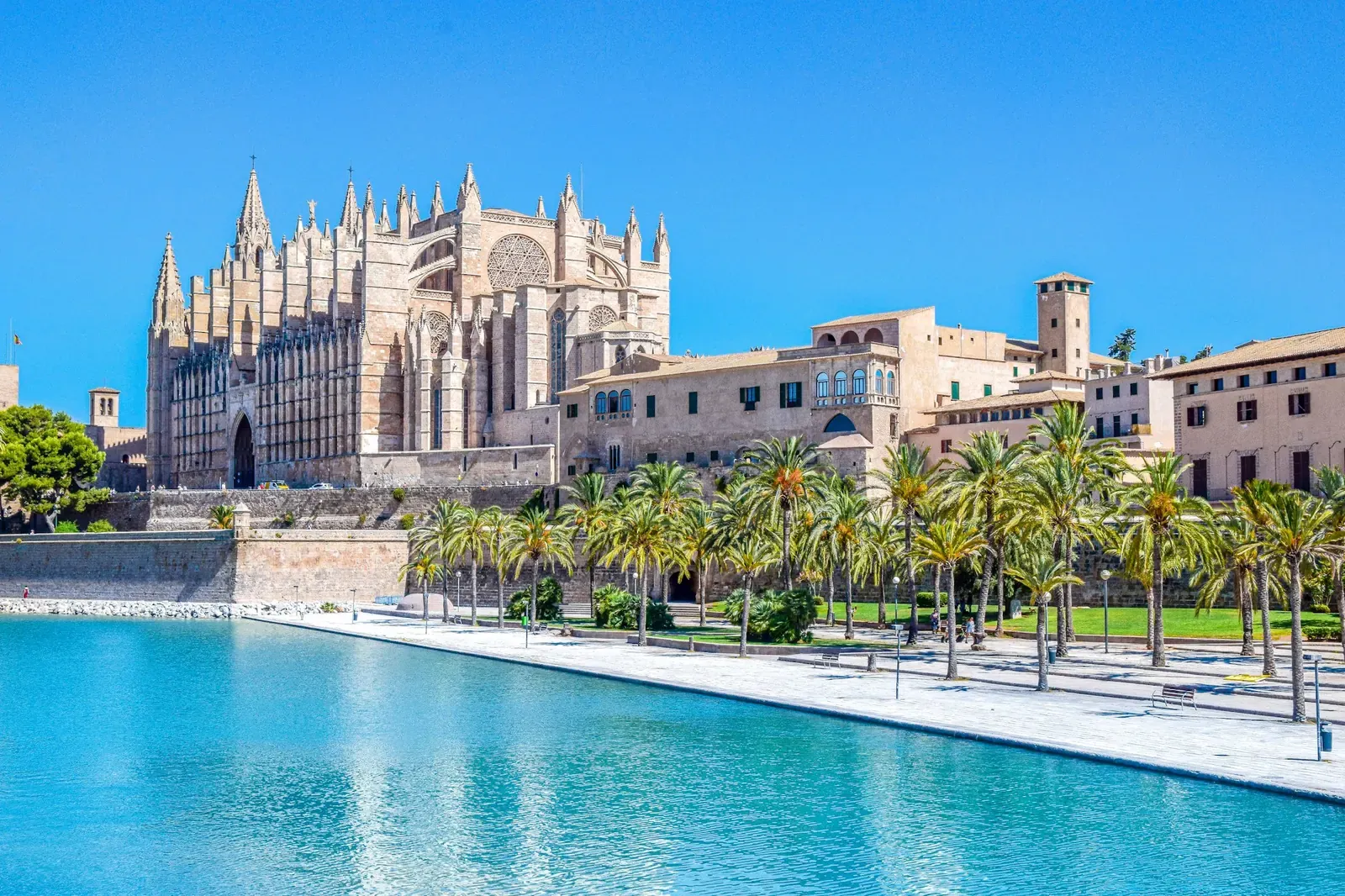
Palma’s old town hides dozens of courtyards (patis) behind heavy wooden doors, and some of its noble houses, palaces and boutique hotels host weddings. They suit couples who want a city wedding, with guests staying in hotels within walking distance, an evening drink on a rooftop terrace and the cathedral in the background. Capacity is usually smaller than at a finca, and music rules in the city centre are stricter, but the atmosphere is hard to match.
Hotels and resorts
From boutique hotels in mountain villages to five-star resorts on the coast, hotels offer the simplest logistics: rooms for you and your guests, in-house catering, staff who host events regularly and indoor spaces if the weather turns. The trade-offs are less flexibility over suppliers and menus, other guests around unless you book the whole property, and higher prices for exclusive use. Published ranges put exclusive use of a luxury hotel or resort at €30,000 to €60,000 or more, before catering.
Beach clubs and seafront restaurants
For couples who want the sea at the centre of the day, a beach club or a restaurant on the water can be perfect: a ceremony at sunset, dinner by the water and dancing under the stars. In practice, most beach clubs limit guest numbers, have fixed time slots and stop amplified music early, especially in residential areas. A ceremony on the sand itself is a different matter: Spanish beaches are public land, so it usually needs permission from the town hall, and sometimes from the coastal authorities, and some beaches don’t allow events at all.
Private villas
A private villa with a pool and a sea view can make for a beautiful, intimate wedding. But be careful: holiday rental homes in the Balearic Islands are licensed for tourist accommodation, not for events, and the regional government has cracked down hard on illegal parties in them, with fines for owners of €150,000 to €300,000 and the withdrawal of the rental licence. A villa wedding is only a good idea if the owner confirms in writing that the property can legally host an event of your size, and if the neighbours and noise rules allow it.
Churches and chapels
If you’re planning a Catholic church wedding, the ceremony takes place in a church or chapel, and the celebration moves to your venue afterwards. Mallorca has beautiful parish churches in villages such as Valldemossa, Deià and Fornalutx, but each parish sets its own rules for couples from abroad, and Palma Cathedral only marries residents. Our guide to getting legally married in Mallorca explains how it works.
Wedding venues in Mallorca with accommodation
“Wedding venues in Mallorca with accommodation” is one of the most searched phrases for a reason: having your guests sleep where you celebrate solves transport, makes a wedding weekend easy and turns the day into a shared stay. There are three common set-ups:
- Hotels and agrotourism estates (agroturismes) where you can book all the rooms, sometimes on a minimum number of nights.
- Fincas with a main house that sleeps the couple and close family, while other guests stay in nearby hotels.
- Event venues with a suite for the couple’s wedding night, but no guest rooms.
If accommodation matters to you, ask how many people can sleep on site, whether rooms are included in the venue fee or charged separately, the minimum stay in high season, and whether non-staying guests have to leave by a set time.
Wedding venues in Mallorca by the sea
Sea views come in many forms on the island: clifftop terraces on the Tramuntana coast, hotel gardens above a bay, beach clubs on the sand and fincas a few minutes from the shore. A few things to weigh up:
- Wind and sun. A terrace facing west gives you a spectacular sunset, and your guests a low sun in their eyes during the ceremony. A coastal headland can be windy in the evening.
- Neighbours. Seafront venues are often in residential or tourist areas, which usually means stricter music limits.
- Exclusivity. Many seafront restaurants and beach clubs remain open to the public unless you pay for exclusive use.
- Access. Coves are beautiful because they’re hidden. Check how guests, caterers and equipment will get there.
The best areas of Mallorca for a wedding
Mallorca is about 100 kilometres from east to west, and most venues are within roughly 30 to 60 minutes’ drive of Palma airport. Each part of the island has a different character.
The Serra de Tramuntana: Deià, Valldemossa, Sóller and Fornalutx
The mountain range along the northwest coast is a UNESCO World Heritage cultural landscape, and the most in-demand area for weddings. Expect stone villages, terraced olive groves, orange groves around Sóller and dramatic sunsets over the sea. Venues here are among the most sought after and priced accordingly, and the roads are narrow and winding, so guest transport needs careful planning. From the airport, Valldemossa is around half an hour and Deià or Sóller around 40 minutes, depending on traffic.
Palma and the southwest
Palma offers the widest choice of hotels, restaurants and city venues, and the easiest logistics: most guests can walk between their hotel and the celebration. The southwest coast, around Calvià, Puerto Portals and Andratx, adds luxury hotels, marinas and sea-view venues within about 30 to 40 minutes of the airport.
The central plain and wine country
The interior of the island, known as Es Pla, is farming country: vineyards around Binissalem and Santa Maria, almond groves, and many of the island’s large event fincas, often with views across to the mountains. It’s usually warmer by day and cooler by night than the coast, and many venues are only 20 to 30 minutes from the airport, which makes life easier for guests and suppliers.
The north: Pollença and Alcúdia
The north combines the old town of Pollença, wide bays and the cliffs of the Formentor peninsula. It’s popular with British families and has plenty of hotels and holiday homes for guests, but it’s further from the airport, at around 50 minutes, so it suits couples planning a full weekend there.
The east and southeast: Artà, Santanyí and the coves
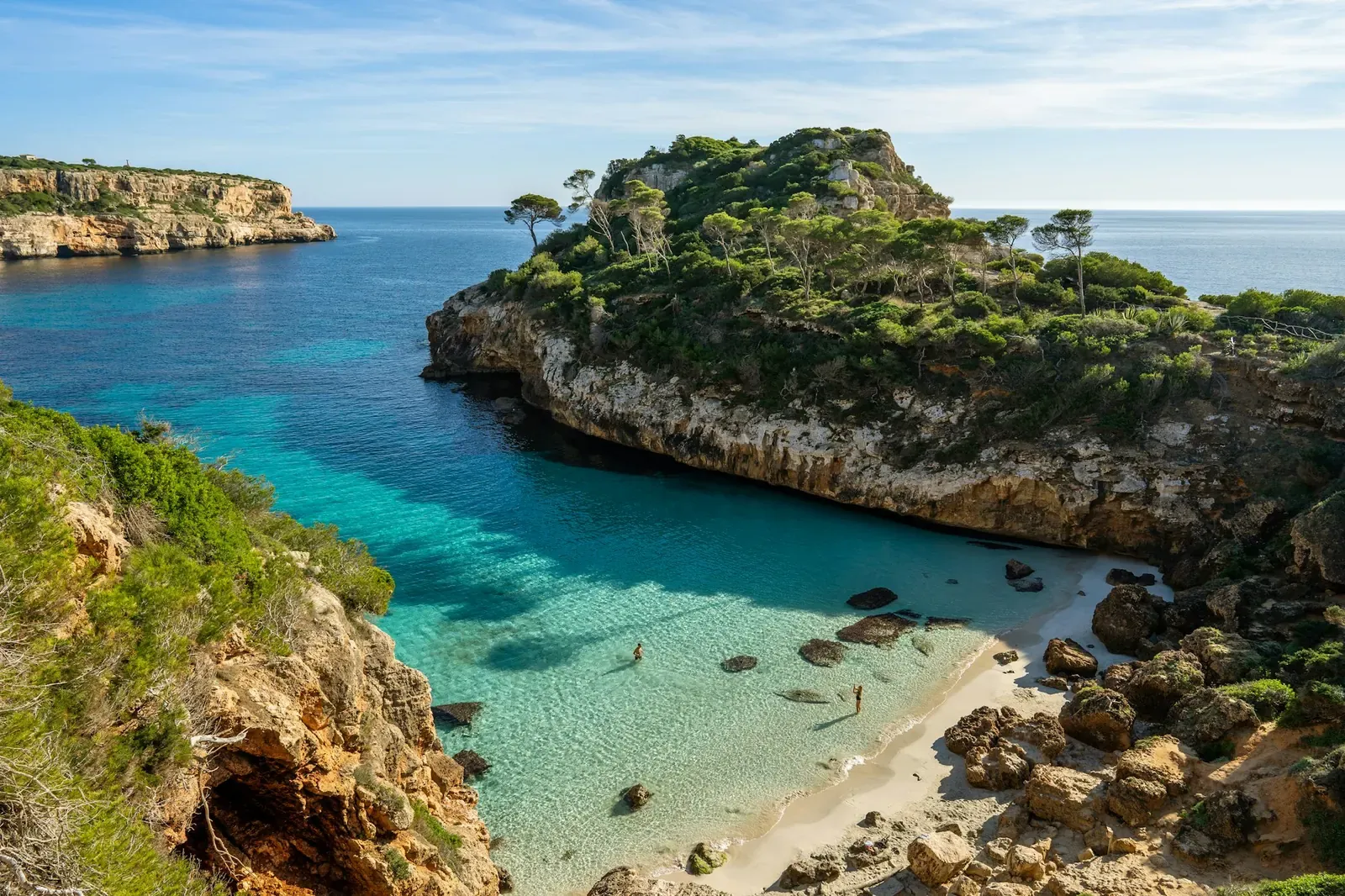
The east coast is known for its calas, small coves with clear turquoise water, and for relaxed villages such as Santanyí, Ses Salines and Artà. It has beautiful country estates and boutique hotels, a slower pace and some of the island’s best beaches for a farewell day. Most of it is 45 minutes to an hour from the airport.
How much does a wedding venue in Mallorca cost?
Venue prices vary more than any other part of a wedding budget. Published ranges for 2025 and 2026 run from:
- Around €4,000 to €15,000 for a rustic finca or villa.
- €10,000 to €40,000 for a historic estate or castle.
- €30,000 to €60,000 or more for exclusive use of a luxury hotel or resort.
At the simpler end, some venues start at around €3,500. Those figures are for the venue alone, and the price structure matters as much as the number. Venues in Mallorca usually charge in one of three ways:
- A hire fee for the space, with your own choice of caterer and suppliers.
- A price per guest, covering catering and drinks, often with a minimum spend or minimum number of guests.
- A combination: a hire fee plus catering from the venue or from an approved list of caterers.
To compare venues fairly, work out what each one costs for your guest count once catering, furniture, lighting, staff and VAT are added. For a full breakdown, see our guide to how much a wedding in Mallorca costs.
Questions to ask before you book a venue
Before you sign, get clear answers, in writing, to these questions:
- What’s included in the price? Tables, chairs, linen, kitchen, lighting, toilets, staff, cleaning, security?
- Is it exclusive use? Will there be other events, hotel guests or members of the public on the day?
- How many guests can it hold for the ceremony, the dinner and the party, both outdoors and indoors?
- What’s the plan B? Is there a covered space big enough for everyone, or room for a marquee, and is it included?
- Can we choose our own caterer and suppliers, or is there an exclusive or approved list?
- Is there a minimum spend or minimum number of guests? Does it change by month or day of the week?
- What time does the music have to stop, outdoors and indoors, and what does an extension cost?
- When can suppliers set up and take down? The day before, or only on the day?
- How many people can stay on site, and what’s the minimum stay?
- How do guests get there? Can coaches reach the entrance? Is there parking?
- Is the electricity supply enough for catering, lighting and a band, or will we need a generator?
- Does the venue hold the licences to host events of our size?
- What are the payment terms, and what happens if we need to change the date or cancel?
- Are there rules on decoration, confetti, candles, sparklers or fireworks?
Rules worth knowing
Music and noise
Most venues have a time when outdoor music must stop, set by their licence and local rules, and a later time for indoor music, if they have a suitable space. Times vary a lot, especially between remote fincas and venues near homes or in town, so ask each venue for its official end times for outdoor and indoor music before you plan the evening.
Fire season, candles and fireworks
Mallorca’s countryside is dry and wooded. In the Balearic Islands, lighting fires on forest land, or on land within 500 metres of it, is prohibited from 1 May to 15 October, and the regional government advises against fireworks near any area at risk of fire. Many fincas are surrounded by pine and olive woodland, so open flames, sky lanterns and fireworks may be restricted or banned. Ask your venue what’s allowed before you plan a sparkler exit.
Beaches and public spaces
A ceremony on a public beach usually needs a permit from the town hall, and sometimes from the coastal authorities, and some beaches don’t allow events at all. The same applies to other public spaces. Leave plenty of time for permits, and have a plan B nearby.
Holiday rentals
As above: a holiday rental licence is for tourist accommodation, not for events. If a villa owner says a wedding is fine, ask them to confirm it in writing and check that the property is allowed to host an event.
How to choose a venue when you live abroad
You don’t need to visit twenty venues to find the right one. A good process looks like this:
- Set your non-negotiables. Guest count, date range, budget, and whether you want guests to stay on site.
- Make a shortlist of three to five venues that fit them, with real prices for your guest count and date.
- Do video tours of each one, ideally at the time of day you’d hold your ceremony.
- Visit the island once, for two or three days, to see your final two or three venues in person and meet key suppliers.
- Book quickly once you’ve decided. Popular Saturdays between May and October can go 12 to 18 months ahead.
What to look for on a venue visit
When you finally stand in a venue, it’s easy to fall for the view and forget everything else. Take an hour to look at the day through your guests’ and suppliers’ eyes:
- Walk the route your guests will take, from the car park or coach drop-off to the ceremony, the drinks and the dinner. Is it lit at night? Is it manageable in heels or for older guests?
- Stand where you’ll get married at the time you’ll get married. Where’s the sun? Where’s the shade? Can everyone hear without a microphone?
- See the plan B space, not just a photo of it. Imagine your full guest list seated inside.
- Look at the practical rooms: the kitchen or catering area, the toilets, a quiet room for getting ready and a place for the band or DJ to set up.
- Listen. Is there a road, a neighbour’s dog or a busy beach nearby? How close are the nearest houses?
- Check the phone signal and the electricity. Suppliers will need both, and so will your guests trying to find the place.
- Ask about other events. Is there another wedding the day before or after? It affects set-up times and how fresh the venue is.
- Picture the photos. Where would your portraits be at golden hour? Your photographer will thank you.
If you can’t visit in person, ask the venue or your planner to film exactly these things, rather than another drone video of the view.
When to book
For a Saturday in June or September, start looking 12 to 18 months before the wedding. For a Friday, a Sunday or a date in April, May or October, 9 to 12 months is often enough. Your date and your venue go hand in hand: some venues are only available on certain days, and the right month for you depends on the kind of wedding you want. Our guide to the best time of year to get married in Mallorca goes through it month by month.
Frequently asked questions
How much does it cost to hire a wedding venue in Mallorca?
Published prices run from around €4,000 for a rustic finca to €60,000 or more for exclusive use of a luxury resort, with some simpler venues from around €3,500. Many venues add a minimum spend on catering, so compare the total cost for your guest count.
Are there wedding venues in Mallorca with accommodation?
Yes. Hotels, agrotourism estates and some fincas offer rooms for the couple and guests. Ask how many people can sleep on site, the minimum stay and whether rooms are included in the venue fee.
Can we get married on a beach in Mallorca?
A symbolic ceremony by the sea is very popular, at a beach club, a clifftop terrace or a seafront finca. A ceremony on the sand of a public beach usually needs permits from the town hall and sometimes the coastal authorities, and some beaches don’t allow events.
Can we have our wedding at a private villa?
Only if the property is legally allowed to host events. Holiday rental licences in the Balearic Islands are for tourist accommodation, and illegal parties carry heavy fines. Ask the owner to confirm in writing.
What time does the music stop at Mallorca wedding venues?
It depends on the venue’s licence and location. Outdoor music usually ends earlier than indoor music. Ask each venue for its official end times before you book.
Can we have fireworks or sparklers at our wedding?
From 1 May to 15 October, fire is prohibited on forest land and land within 500 metres of it, and fireworks near wooded areas are strongly discouraged. Many fincas restrict open flames and pyrotechnics, so check with your venue.
Do Mallorca wedding venues include catering?
Some do, especially hotels and restaurants. Many fincas let you choose a caterer, sometimes from an approved list. Always check what’s included before comparing prices.
What is the best area of Mallorca for a wedding?
It depends on what you want. The Tramuntana for mountains and sunsets over the sea, Palma for a city wedding with easy logistics, the central plain for large fincas close to the airport, and the east coast for coves and a relaxed pace.
How we can help
Finding the venue is where every wedding we produce begins. We’ll shortlist venues that fit your guest count, date and budget, get real prices for your wedding, show you each one by video and organise visits when you come to the island. Then we check the details that photos don’t show: the plan B, the music times, the access for coaches and what’s really included.
See our packages and prices, read the questions couples ask us, or tell us about your wedding.
Planning a wedding in Mallorca? Ask us for a quote: it’s free and there’s no commitment, and we’ll reply with availability and first ideas.
A note on this guide: prices and rules reflect what we found in November 2026. Venue prices change by season and year, and local rules on music, events and fire safety can change too. Always confirm the details with each venue and the relevant authority.
Sources
- Wedding venue Mallorca, mallorca.com
- Mallorca wedding costs in 2025, Sandy Alonso
- How much does a wedding in Mallorca really cost in 2025 or 2026?, Maldita Novia
- Huge fines and licence withdrawal for holiday rentals used for illegal parties, Majorca Daily Bulletin
- Recommendations in the forest (Spanish), Government of the Balearic Islands
- Weddings at the cathedral, Catedral de Mallorca
Photography: Sina Tari, Chloe Frost-Smith, Artem Zhukov, Tom Podmore and Vidit Goswami, via Unsplash.