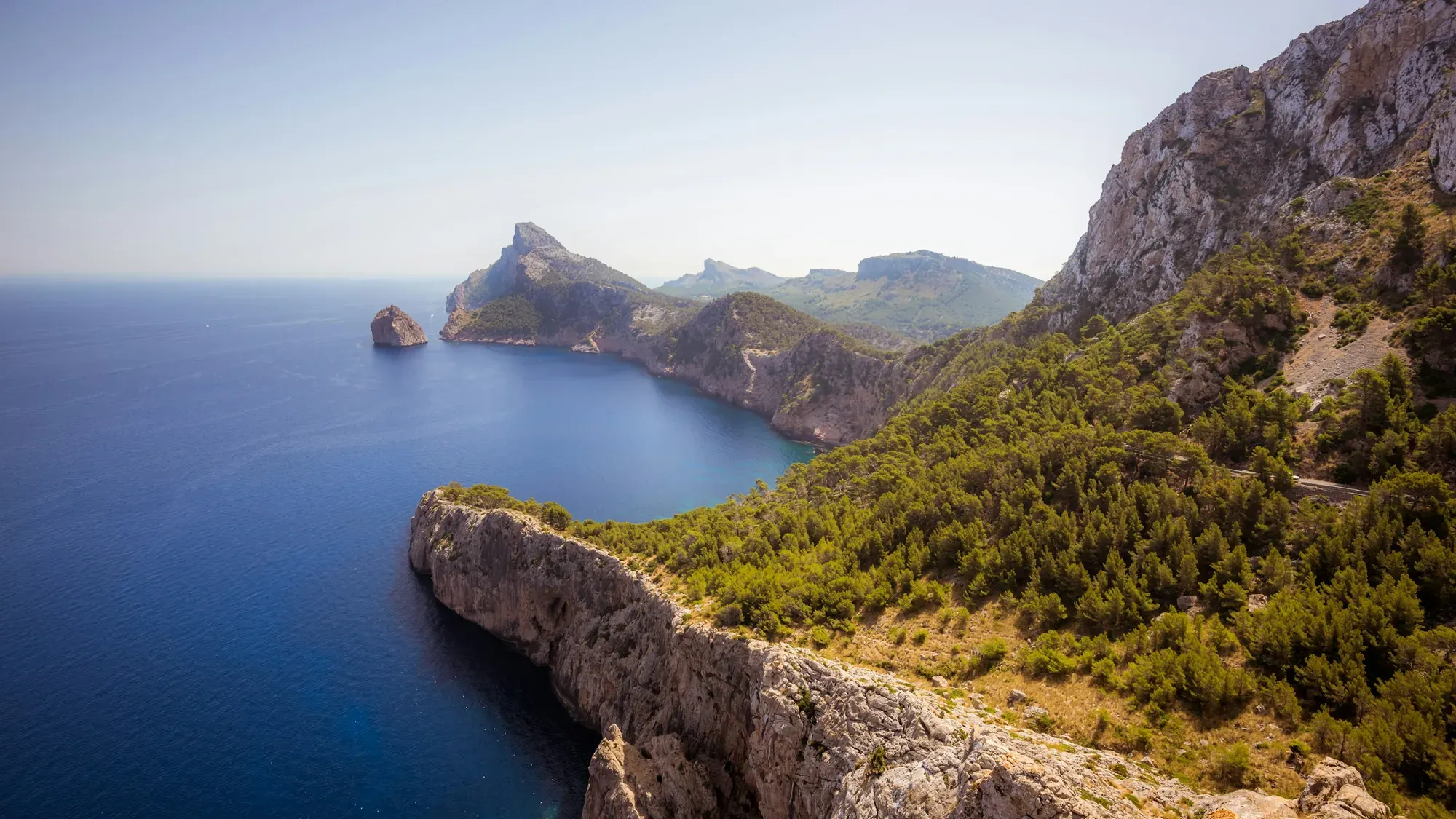
You’ve found the island: the light, the Tramuntana mountains, a finca among the olive trees. Then comes the question almost every couple planning a wedding in Mallorca (or Majorca, as it’s often spelled in the UK) asks sooner or later: can we actually get legally married here, or do we need to be married before we arrive?
The honest answer is that it depends on three things: where you live, whether you’re marrying in the Catholic Church, and how much paperwork you want to take on. This guide walks through every route open to British, American and other English-speaking couples, with the rules as they stand in late 2026 and links to the official sources, so you can choose with confidence and get back to the enjoyable part of planning.
We’re The Vow Producers, a wedding planner in Mallorca, and this is one of the first questions couples ask us, so here is the full answer. If you’re just starting out, our complete guide to getting married in Mallorca covers the rest, from the best time of year to marry to what a Mallorca wedding costs.
The short answer
Yes, you can get legally married in Mallorca, but for most couples who live abroad there is only one realistic way to do it in Spain: a Catholic church wedding. Here is the picture in brief:
- A Spanish civil wedding is only possible if at least one of you lives in Spain or is a Spanish national. Two visitors can’t book a civil ceremony at a Mallorcan town hall.
- A Catholic church wedding is legally binding in Spain without any residency requirement, as long as at least one of you is Catholic and the Church’s paperwork is in order.
- Other religious weddings (Protestant, Jewish, Muslim and a few other faiths) can be legally valid in Spain, but they depend on a civil certificate that, in practice, only residents can obtain.
- A symbolic ceremony is what most international couples choose. You sign the legal papers at home, before or after the trip, and celebrate your wedding in Mallorca exactly the way you want it.
If you take one thing from this guide, make it this: a beautiful ceremony at a finca, led by a celebrant, is not a legal marriage in Spain unless it fits one of the routes above. That isn’t a problem, as long as you plan for it from the start.
Your three routes at a glance
| Spanish civil wedding | Catholic church wedding | Legal at home, symbolic in Mallorca | |
|---|---|---|---|
| Legally binding? | Yes | Yes, once registered in Spain | Yes, through your ceremony at home |
| Residency needed? | Yes, one of you must live in Spain | No | No |
| Who it suits | Residents and Spanish nationals | Couples where at least one partner is Catholic | Everyone, including same-sex couples |
| Where it happens | Civil Registry, town hall or notary | A Catholic church or chapel | Wherever you like |
| Paperwork | Heavy: apostilles, sworn translations, consular certificates | Moderate: a Church file sent from your home parish | Light: your usual process at home |
| Typical lead time | 4 to 6 months | 6 to 9 months | Your home notice period |
Route 1: A Spanish civil wedding (and why most couples can’t use it)
A civil wedding is the non-religious legal ceremony. In Spain it is performed by a Civil Registry officer, a justice of the peace, a mayor or councillor, or a notary. It’s the route Spanish couples use every day, and it’s the one most people picture when they ask whether they can “get married legally in Spain”. For couples who live abroad, it is almost always closed.
The residency rule
Before any civil wedding, Spanish law requires a marriage file (the expediente matrimonial): a formal check that you are both free to marry. That file is opened before the Civil Registry, or a notary, in the place where one of you lives. The Spanish government’s own guidance says the file is processed “at the place of residence of either spouse”.
The UK government puts it more plainly: you or your partner must live in Spain or be a Spanish national to get married there. The Australian Embassy in Madrid says the same thing, adding that the resident partner must be registered with a local council in Spain.
So if you both live in London, New York or Sydney, no Mallorcan registry or notary has the authority to open your file, and there is no civil ceremony to book. This is also why you will not find a town hall in Mallorca offering civil weddings to tourists, whatever some holiday packages imply.
Where the “two years” figure comes from
Many wedding websites state that one of you must have lived in Spain for at least two years. Spanish law doesn’t set a minimum period in quite those terms, but the marriage application asks for every address you’ve had over the past two years, and consulates often issue a certificate of residence covering that period. In practice, couples who have only just moved can find the process slower or more complicated, which is where the “two-year rule” comes from. If one of you has recently moved to Mallorca, ask the Civil Registry or a notary exactly what they will need before you set a date.
When the civil route does work
There are two common situations where a civil wedding in Spain is open to you:
- One of you lives in Spain. If one partner is resident and registered on the padrón (the town hall register) in Mallorca or elsewhere in Spain, you can open the file there.
- One of you is Spanish. A Spanish national living abroad can usually open the file through the Spanish consulate that covers their area, and the wedding can then take place in Spain.
If either applies to you, a civil wedding can be a lovely option. Just allow time: the file can’t open until every document is ready, and a registry or notary will set its own timetable.
Documents for a Spanish civil wedding
The exact list varies from one registry or notary to another, so always ask for theirs in writing. Expect to need:
- Valid passports for both of you.
- A full (long-form) birth certificate for each of you, recently issued, with an apostille and a sworn translation into Spanish. Some offices want it issued within the last three months.
- Proof of where you have lived over the past two years.
- Proof that you are free to marry. British nationals use a Certificate of No Impediment (CNI) and, in some registries, a Marital Status Certificate (MSC). Americans usually sign a sworn statement of marital status before a US consular officer in Spain, because the US has no national marriage register to issue a certificate.
- If either of you has been married before, the divorce decree or death certificate, also apostilled and translated.
- Details and identification for your two witnesses.
A few details catch people out. A sworn translation has to be done by a traductor jurado, a translator authorised by the Spanish Ministry of Foreign Affairs; an ordinary certified translation from home is often refused. Many documents have a shelf life, so ordering them too early can mean ordering them twice. And for British couples, the British Consulate-General in Madrid has only accepted CNI and MSC applications online since 3 February 2025, with each form notarised separately.
Route 2: A Catholic church wedding in Mallorca
This is the exception that surprises most couples. Under the 1979 agreement between Spain and the Holy See, a Catholic marriage has full civil effect in Spain. You don’t need a separate civil ceremony, and Spanish civil law sets no residency requirement for it. Once your marriage is entered in the Spanish Civil Registry, you are legally married, in Spain and back home.
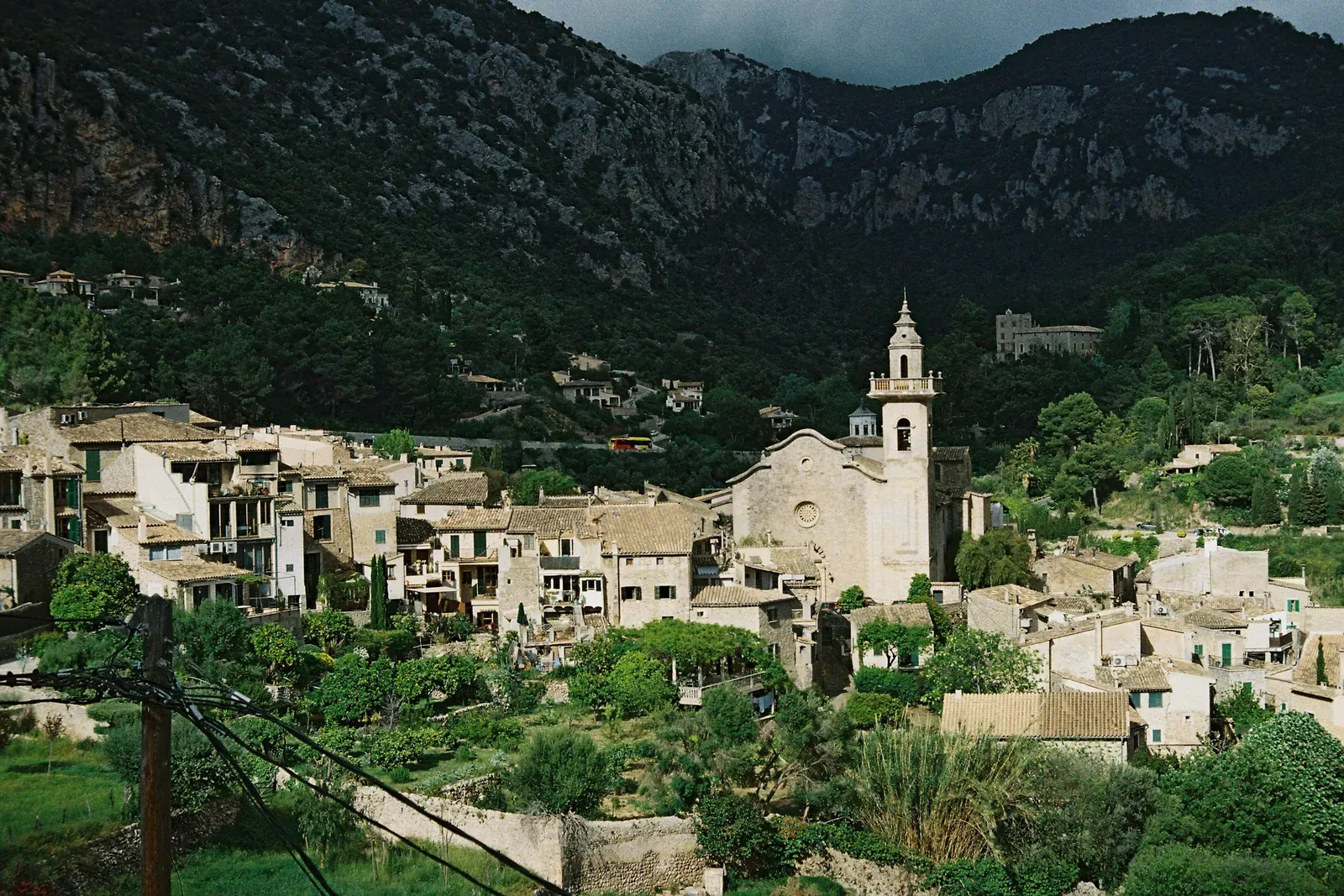
Mallorca has a deep and living Catholic tradition, from the stone churches of mountain villages to the monasteries and hilltop sanctuaries that crown the island. For couples of faith, it is a route worth taking seriously.
Who can marry in church
- At least one of you must be a baptised Catholic. If your partner is a baptised Christian of another denomination, your priest will ask the bishop for permission for a mixed marriage; if your partner isn’t baptised, the priest will ask for a dispensation. Both are routine, but they add time.
- Previous marriages matter. If either of you has been married before, the Church will normally need a declaration of nullity (an annulment) of the earlier marriage, unless that marriage was never recognised by the Church in the first place. Raise this with your priest at the very first meeting.
- The ceremony takes place in a church or chapel. A Catholic wedding on a terrace or a beach is the exception rather than the rule and needs the bishop’s permission, so don’t plan around one.
- Language is a conversation. Ceremonies in Mallorca are usually in Spanish or Catalan. Many couples look for an English-speaking priest, or bring a priest from home, who will then need permission (known as delegation) from the parish where you marry. Ask, too, whether the ceremony will include Mass.
The paperwork, step by step
- Choose your church and speak to the parish. Confirm the date, the priest, the language and whether Mass is included before you commit to anything else. A planner on the island can make this first contact for you.
- Open your prenuptial file at home. Each of you meets your own parish priest to complete the prenuptial enquiry. The Diocese of Cork and Ross in Ireland, for example, asks couples to do this at least four months before a wedding abroad; for a summer date in Mallorca, we suggest starting six to nine months ahead.
- Gather the Church documents. These typically include a baptism certificate issued within six months of the wedding, proof of confirmation, letters of freedom if you’ve lived in other parishes as an adult, and a certificate from a marriage preparation course.
- Your diocese sends the file to Mallorca. Your home parish passes the papers to your diocese, which checks them and forwards them to the Diocese of Mallorca (Mallorca has its own diocese, separate from those of Menorca and Ibiza). Mallorca then grants permission and passes the file to the parish where you will marry.
- Prepare any civil documents you’re asked for. Some parishes also ask for a birth certificate or proof of single status, apostilled and translated, so the marriage can be registered without delays. Ask early so there are no surprises.
- Marry, then register. After the ceremony, the Church certificate of your marriage is submitted to the local Civil Registry, usually by the parish, and the registry enters it in its records.
After the wedding: your marriage certificate
Once your marriage is registered, you can request a Spanish marriage certificate (certificado de matrimonio) from the Civil Registry. For use in the UK, the US or elsewhere, you’ll usually want it apostilled in Spain and, where the office asking for it requires one, translated. Registration isn’t instant, so allow some weeks before you need the certificate for a name change, a passport or a joint mortgage application.
Can you get married in Palma Cathedral?
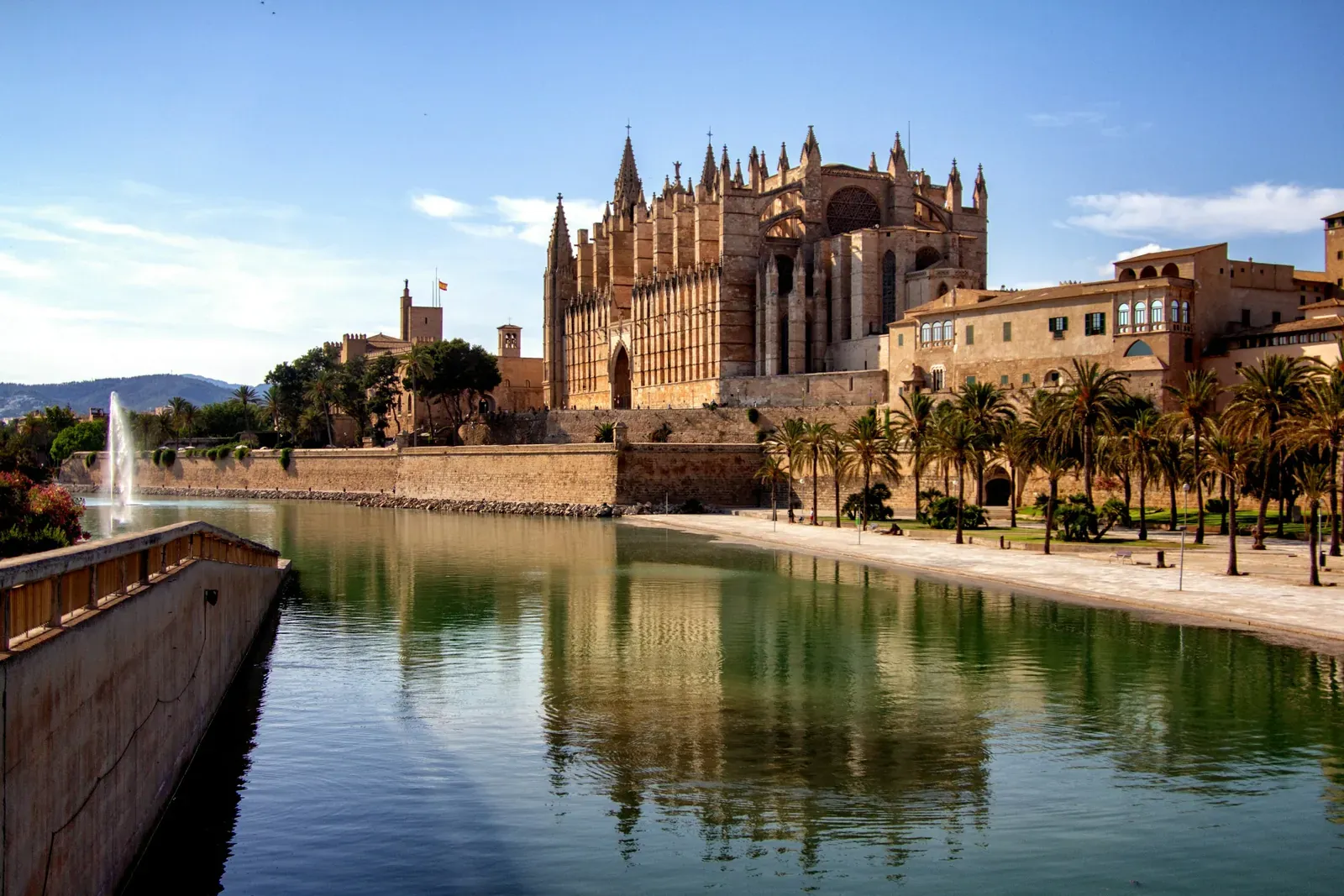
It’s one of the most searched questions about weddings in Mallorca, and for most couples the answer is no. On its own website, Palma Cathedral (La Seu) lists weddings under “Marriage (Residents only)”, with ceremonies on Friday and Saturday evenings booked through the cathedral office. If you live on the island, contact them directly. If you don’t, Mallorca has many other beautiful churches, from the old town of Palma to villages such as Valldemossa, Deià and Fornalutx, and each parish sets its own policy for couples from abroad.
What about other faiths?
Protestant, Jewish, Muslim and other recognised faiths
Spain also gives legal effect to marriages celebrated by Protestant (evangelical), Jewish and Islamic communities under their 1992 agreements with the State. Since 2015, the same applies to faiths with notorio arraigo (deep-rooted) status: the Church of Jesus Christ of Latter-day Saints, Jehovah’s Witnesses, Buddhist communities within the Spanish Buddhist federation, and the Orthodox Churches.
The catch is the paperwork. Unlike a Catholic wedding, these ceremonies need a prior civil certificate of marriage capacity, and the notary who handles it is the one in the place where either of you lives. The ceremony then has to take place within six months of the certificate being issued. For couples who live in Spain, that works well. For couples flying in, it brings back the same residency obstacle as a civil wedding.
Church of England and other Anglican couples
An Anglican or other Protestant ceremony from home has no automatic legal standing in Spain. Most Church of England couples marry legally in the UK, often in their parish church, and then hold a service of blessing or a symbolic ceremony in Mallorca. Your vicar can advise on what a blessing abroad might look like.
Route 3: Legal at home, celebration in Mallorca
This is how most international couples marry in Mallorca, and for good reason. You complete the legal formalities at home, often a short, simple ceremony with two witnesses, and your wedding in Mallorca becomes the one you and your guests remember: the vows, the music, the setting, the long dinner under the stars.
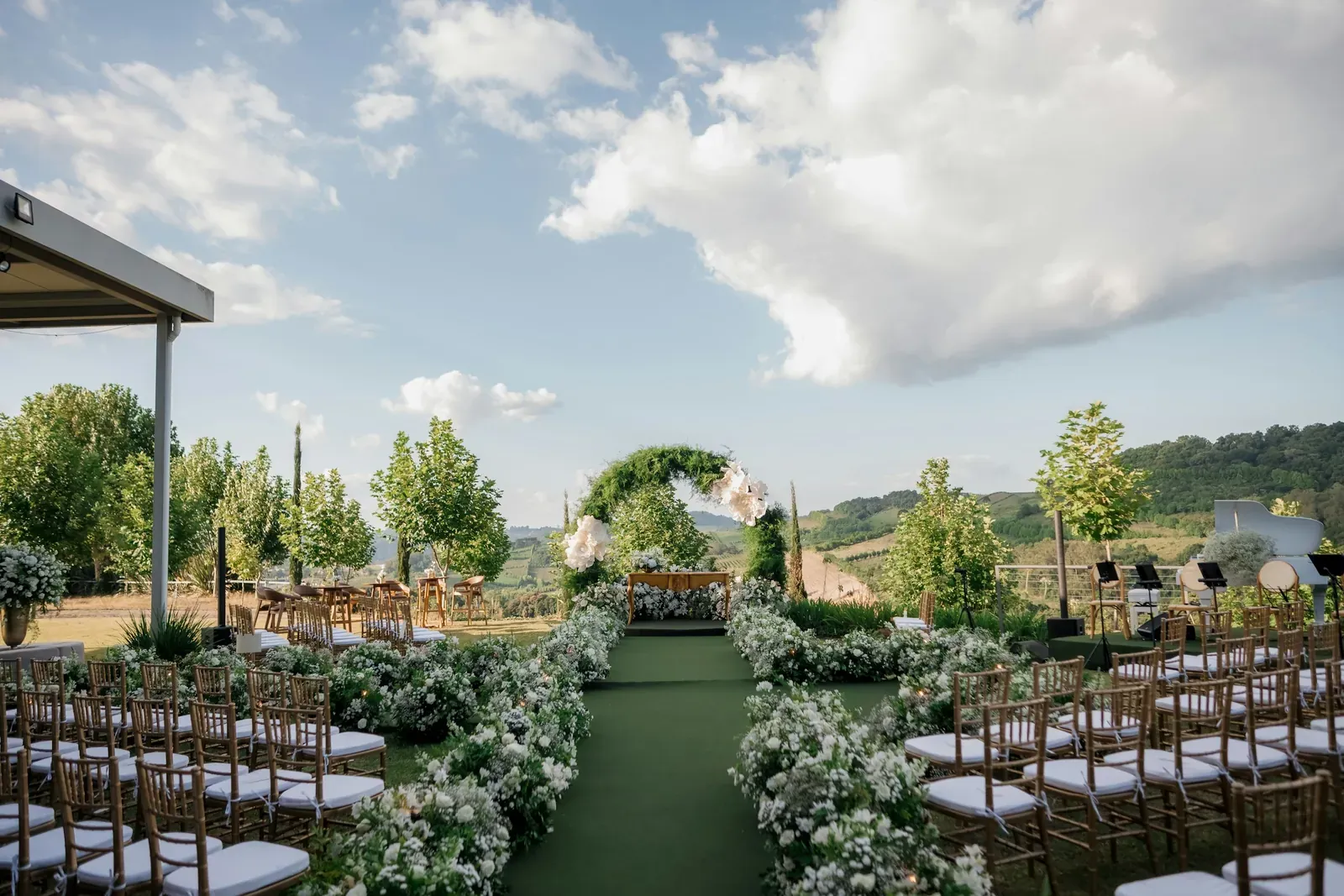
What a symbolic ceremony is (and isn’t)
A symbolic ceremony looks and feels exactly like a wedding. There is an aisle, there are vows, rings, readings and, very often, tears. What it doesn’t do is create a legal marriage. And because it isn’t bound by Spanish marriage law, it can be:
- Anywhere: a finca among olive trees, a clifftop terrace, a palace courtyard in Palma, the garden of a private villa.
- At any time: at sunset, if you like, with no registry opening hours to work around.
- In your language: led by an English-speaking celebrant, a friend or someone from your family.
- Entirely yours: your own vows, a blend of two faiths or cultures, readings from both families, a handfasting or a unity ritual, or none of the above.
- Open to every couple: including same-sex couples and those who have been married before.
Why so many couples choose it
The legal step at home is usually quick and inexpensive. It avoids apostilles and sworn translations, and it means nothing can go wrong with Spanish paperwork in the weeks before your wedding. It also lets you choose your venue purely for how it looks and feels, not for what a registry allows. Many couples keep the legal ceremony small and private; whether you tell your guests about it is entirely up to you.
Getting legally married in England and Wales
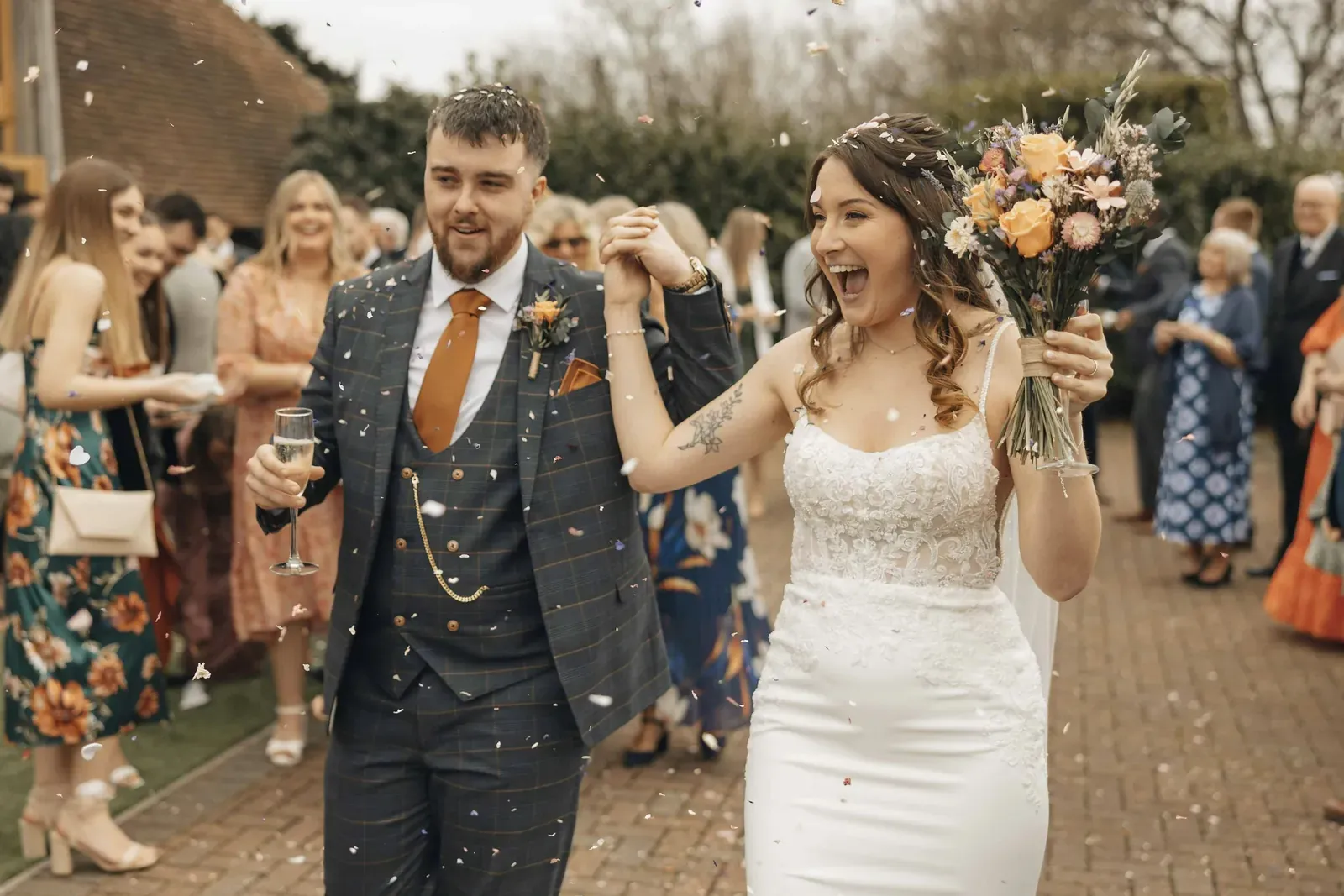
You give notice at your local register office, in a district where you have lived for at least the past seven days. Notice must be given at least 29 days before the ceremony, and you must marry within 12 months of giving notice. A ceremony at the register office costs £62 (fees are higher at approved venues), you need two witnesses, and you must exchange vows. Civil ceremonies can’t include religious content. Many couples book a quiet weekday slot a week or two before they fly out.
Scotland and Northern Ireland
In Scotland, the registrar must receive your marriage notices no later than 29 days before the wedding, and National Records of Scotland recommends sending them 10 to 12 weeks ahead. In Northern Ireland, the legal minimum is 28 days, but notices should normally reach the registrar about eight weeks before the marriage, or ten weeks if either of you has been married or in a civil partnership before.
Getting legally married in the United States
Marriage is regulated state by state, so start with the county clerk where you plan to marry. In general, you apply for a marriage licence, sometimes wait a short period before you can use it, and must hold the ceremony before the licence expires, in the state that issued it. A US marriage licence can’t be used for a ceremony in Spain. Many couples marry at the courthouse, or with an officiant at home, in the days or weeks before they travel.
Ireland, Canada and Australia
- Ireland: you must give at least three months’ notice, and both of you attend a notification appointment with the Civil Registration Service.
- Canada: marriage licences are issued by each province or territory, each with its own requirements and validity period.
- Australia: you lodge a Notice of Intended Marriage with an authorised celebrant at least one month, and no more than 18 months, before the wedding.
Before or after Mallorca?
Either works. Marrying before means you arrive with the paperwork done and nothing left to chase. Marrying after works too, but check your notice period: it runs from the day you give notice, not from the day you get home, so you may need to give notice before you travel. Whichever you choose, your legal anniversary is the date on your certificate, and plenty of couples simply celebrate their Mallorca date as the day that counts.
Same-sex couples marrying in Mallorca
Spain legalised same-sex marriage in 2005, and Mallorca is a relaxed, welcoming place to celebrate. The legal position is the same as for any couple: a Spanish civil wedding requires at least one of you to live in Spain, and a Catholic wedding isn’t available. In practice, same-sex couples from the UK, the US, Ireland, Canada and Australia, all places where same-sex marriage is legal, usually marry at home and then celebrate with a symbolic ceremony in Mallorca designed entirely around them.
Will our marriage be recognised back home?
If your marriage is legally valid in Spain, it will generally be recognised in the UK, the US, Ireland, Canada and Australia. The Australian government, for example, says an overseas marriage is generally recognised if it was valid where it took place and would also have been valid under Australian law. That covers a registered Catholic wedding in Mallorca as well as a Spanish civil wedding.
What you’ll need is proof: a Spanish marriage certificate from the Civil Registry, apostilled, and translated if the office asking for it requires a translation. You don’t need to marry again at home. A symbolic ceremony, by contrast, isn’t a marriage in law anywhere, which is exactly why the legal step happens at home.
Planning timeline: when to start each route
Legal at home, symbolic ceremony in Mallorca
- 12 to 18 months before: book your venue, your planner and your celebrant in Mallorca, especially for a date between May and October.
- 3 to 6 months before: book your register office, courthouse or officiant at home and note the window for giving notice.
- When your notice period requires it: give notice (29 days in England, Wales and Scotland, 28 in Northern Ireland, three months in Ireland, one month in Australia, and according to state rules in the US).
Catholic church wedding in Mallorca
- 9 to 12 months before: choose your church and confirm the date, the priest and the language.
- 6 to 9 months before: open your prenuptial file with your home parish and book your marriage preparation course.
- Within 6 months of the wedding: request your baptism certificates, which must be recently issued.
- 2 to 3 months before: check that the Diocese of Mallorca has received your file and that the parish has everything it needs.
- After the wedding: follow up the registration and order your marriage certificate.
Spanish civil wedding (if one of you lives in Spain)
- 6 months before: ask the Civil Registry or notary for their document list, then order birth certificates, apostilles, translations and consular certificates.
- 3 to 4 months before: submit the file, leaving room for questions or missing documents.
Common mistakes (and how to avoid them)
- Assuming your venue or celebrant can make it legal. Unless your ceremony is a Catholic wedding or a Spanish civil or religious wedding with the right file behind it, it is symbolic. Plan the legal step separately.
- Leaving the legal ceremony at home too late. Notice periods are fixed. Put your notice date in the diary as soon as you book Mallorca.
- Ordering documents too early. Baptism certificates for a Catholic wedding must be recent, and many Spanish offices want birth certificates issued within the last few months.
- Using the wrong translator. For Spanish authorities, use a traductor jurado. An ordinary translation, however good, may be refused.
- Falling for a church before checking its rules. Palma Cathedral, for example, only marries residents. Confirm a church accepts couples from abroad before you build a day around it.
- Forgetting the certificate. After a Catholic wedding, follow up the civil registration and order your apostilled certificate before you need it at home.
Frequently asked questions
Can you get married in Mallorca if you’re not a resident?
Yes, but only in a Catholic church wedding, which needs at least one of you to be Catholic. A Spanish civil wedding requires at least one partner to live in Spain or be a Spanish national. Most non-resident couples marry legally at home and hold a symbolic ceremony in Mallorca.
Can two foreigners get married in Spain?
Yes, if at least one of you lives in Spain: foreigners can marry under the same rules as Spaniards. If neither of you lives in Spain, a civil wedding isn’t possible, but a Catholic church wedding still is.
Can tourists get married in Spain?
Not in a civil ceremony. Tourists can marry legally in a Catholic church if they meet the Church’s requirements, or celebrate with a symbolic ceremony after marrying legally at home.
Is a symbolic wedding in Mallorca legally binding?
No. A symbolic ceremony has no legal effect in Spain or anywhere else. It is a full wedding celebration, often the most personal part of the day, but the legal marriage happens separately, usually at home.
Do we have to be legally married before our destination wedding?
No. You can marry legally before or after your celebration in Mallorca. Marrying before is simpler, because you arrive with the paperwork finished; if you marry after, check your notice period so you can give notice in time.
Can we get married on a beach in Mallorca?
A symbolic ceremony can take place by the sea, and many couples choose a beach club, a clifftop terrace or a finca with sea views. Spanish beaches are public land, so a ceremony on the sand itself usually needs permits from the local authorities (the town hall, and sometimes the coastal authorities too), and some beaches don’t allow events at all. A Catholic wedding on a beach is very unlikely to be permitted.
Can a Catholic and a non-Catholic marry in church in Mallorca?
Yes. Your priest will request permission (for a baptised Christian partner) or a dispensation (for a partner who isn’t baptised) from the bishop. Allow extra time for it in your prenuptial file.
How far in advance should we start the legal paperwork?
For a Catholic wedding, six to nine months ahead. For a legal ceremony at home, check your notice period: 29 days in England, Wales and Scotland, 28 in Northern Ireland, three months in Ireland and one month in Australia, with rules varying by state in the US.
How we can help
Every wedding we produce starts with this conversation. On our first call we’ll work out which route fits you, build the legal deadlines into your planning timeline and, if you’re marrying in church, coordinate with the parish in Mallorca. If you’re marrying at home first, we’ll design the Mallorca ceremony around you: the setting, the celebrant, the music and every detail of the day.
See what we do, read the questions couples ask us, or tell us about your wedding.
Planning a wedding in Mallorca? Ask us for a quote: it’s free and there’s no commitment, and we’ll reply with availability and first ideas.
A note on this guide: it reflects the rules as we found them in November 2026 and is general information, not legal advice. Requirements change, and individual registries, consulates and parishes can ask for more than the official minimum. Always confirm with the relevant authority before you book.
Official sources
- Marriage: rights and obligations, Government of Spain
- Religious marriage: questions and answers (Spanish), Ministry of the Presidency, Spain
- Getting married in Spain, GOV.UK
- Marriages and civil partnerships in England and Wales, GOV.UK
- Marriage in Scotland information leaflet, National Records of Scotland
- How and when to give notice for marriage, nidirect
- How to get married in Ireland, HSE
- Getting married in Spain, Australian Embassy in Spain
- Get married, Attorney-General’s Department, Australia
- Marriage abroad, Diocese of Cork and Ross
- Weddings at the cathedral, Catedral de Mallorca
Photography: Stefan Kunze, Mirko Hirsch, Yves Alarie, Jonathan Borba, Ben Atkins, Désirée Fawn and Reiseuhu, via Unsplash.